Mục lục bài viết (9)
- What is industrial barcode decal label paper? Difference from standard decal
- Criterion 1: Adhesion — acrylic or rubber adhesive?
- Criterion 2: Heat and chemical resistance
- Criterion 3: Compatibility with Zebra barcode printers and sensors
- Criterion 4: Paper material — thermal direct, coated paper, or synthetic plastic?
- Criterion 5: Roll size and core diameter
- Comparison of industrial barcode decal label paper brands: Avery, UPM, LINTEC
- Case study: Electronics component factory in Binh Duong saves 25% printing costs
- Frequently Asked Questions
Industrial barcode decal label paper is an indispensable consumable material in production management, warehouse operations, and supply chain processes at Vietnamese factories. According to a Việt POS survey, 35% of barcode printing errors stem from selecting the wrong decal label paper type — resulting in blurred, peeling labels or incompatibility with printers. This article provides 5 technical criteria for selecting industrial barcode decal label paper, helping factories reduce waste and optimize operations.
What is industrial barcode decal label paper? Difference from standard decal
Industrial barcode decal label paper is a label type designed to print barcodes (1D, 2D) and product information, with strong adhesion to multiple surfaces (plastic, metal, cardboard) and resistance to harsh conditions such as high temperature, oil, and moisture. Unlike standard office decal, the industrial type has a 3-layer structure: face layer (paper/plastic), adhesive layer (acrylic/rubber), and release layer (silicon) — ensuring durability and accurate printing on Zebra, Honeywell, and TSC barcode printers.
Criterion 1: Adhesion — acrylic or rubber adhesive?
Adhesion determines whether labels peel during transport, storage, or use. Acrylic adhesive suits smooth, low-oil surfaces (cardboard boxes, plastic bottles). Rubber adhesive adheres well to rough surfaces and low-temperature environments (cold storage, wooden pallets). For heavy industrial environments (oil, chemicals), choose high-strength acrylic or hybrid adhesive. If uncertain, request sample labels to test on actual surfaces and check after 24 hours.
Bạn đang tìm sản phẩm cho chủ đề này?
Việt POS phân phối chính hãng — bảo hành 24-36 tháng, hỗ trợ kỹ thuật 24/7.


Criterion 2: Heat and chemical resistance
Food, pharmaceutical, and chemical factories typically require labels to withstand temperatures from -20°C to 150°C and contact with solvents or UV rays. Synthetic plastic decal paper (polypropylene, polyester) offers better heat and chemical resistance than thermal direct or standard paper. A case study at a seafood processing factory in Can Tho showed that switching from standard thermal paper to synthetic plastic decal reduced label failure rates by 40% after freezing.
Criterion 3: Compatibility with Zebra barcode printers and sensors
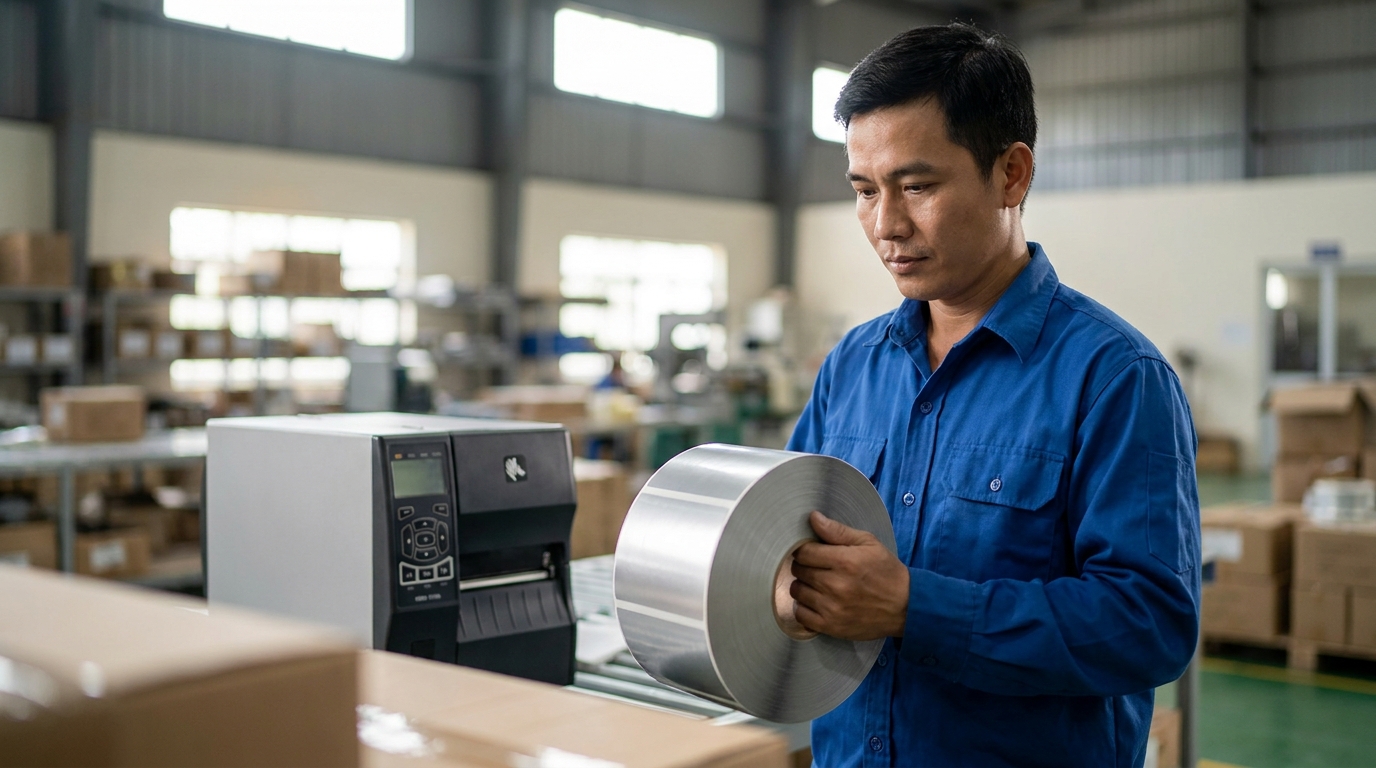
Zebra barcode printers (ZD, ZT, GX series) use gap sensors or reflective sensors to align labels. Decal paper must have proper gaps or standard black marks at correct dimensions, thickness 80-250 micron, and silicon release layer to prevent paper jams. Using paper thinner than 60 micron makes it difficult for the printer to detect sensors, resulting in misaligned or skipped printing. Việt POS recommends checking printer specifications before placing large orders of decal paper.
Criterion 4: Paper material — thermal direct, coated paper, or synthetic plastic?
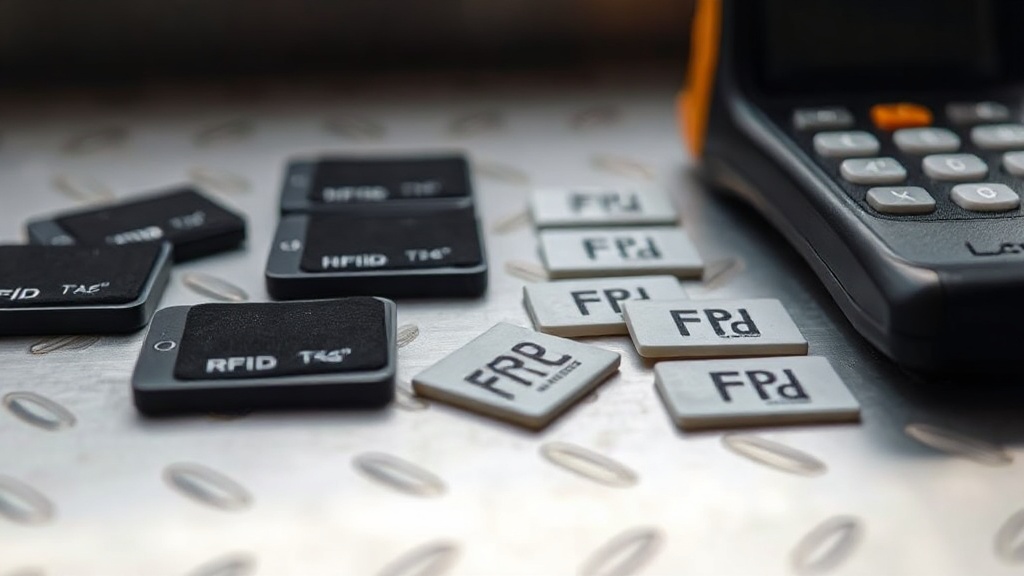
Each material has specific applications. Thermal direct paper (thermal direct) requires no ink and suits short-term labels (shipping labels, temporary tags). Coated paper requires wax or wax/resin ink, adheres well to cardboard boxes, and is cost-effective. Synthetic plastic paper (synthetic) resists water, oil, and chemicals with long lifespan — ideal for long-term industrial product labels. The table below compares cost and durability:
| Material | Cost (VND/500-label roll) | Durability | Application |
|---|---|---|---|
| Thermal direct paper | 50,000 - 80,000 | 1-3 months | Shipping labels, temporary tags |
| Coated paper | 40,000 - 70,000 | 3-6 months | Cardboard boxes, pallets |
| Synthetic plastic | 120,000 - 200,000 | 12-24 months | Industrial products, chemicals |
Criterion 5: Roll size and core diameter
Roll dimensions (outer diameter, width) and core diameter (1 inch / 3 inch) must match the printer. Mismatched core causes loose spindles, vibration, or paper jams. For example, Zebra ZD621 uses 1-inch core, while Zebra ZT610 uses 3-inch core. Additionally, label width must be less than or equal to the printer's maximum print width. Measure current label size and check printer specifications before ordering.
Comparison of industrial barcode decal label paper brands: Avery, UPM, LINTEC
Major label manufacturers such as Avery Dennison, UPM Raflatac, and LINTEC offer diverse product lines. Avery stands out for high adhesion and surface variety. UPM specializes in environmentally friendly paper. LINTEC focuses on heat-resistant decal for electronics. However, cost and availability in the Vietnamese market are decisive factors. Many small and medium factories choose domestically produced decal paper (manufactured in Vietnam) to save 15-20% in costs, but must verify quality certifications.
Case study: Electronics component factory in Binh Duong saves 25% printing costs
An electronics component factory at My Phuoc 3 Industrial Zone (Binh Duong) experienced labels peeling three days into storage, causing shipping delays. After applying the 5 criteria above, they switched to synthetic plastic decal paper with wax/resin ink on a Zebra ZT410 printer. Result: label failure rate dropped from 12% to 1.5%, reducing printing costs by 25% and inspection labor.
Frequently Asked Questions
Can industrial barcode decal label paper be printed on a laser printer?
Technically yes, but not recommended. Laser printers generate high heat that can warp or melt decal adhesive, causing paper jams and reducing adhesion quality. Dedicated barcode printers (Zebra, TSC, Honeywell) use thermal direct or thermal transfer technology for stable print quality and superior label durability.
How do I know if decal paper is compatible with Zebra printers?
Check specifications: sensor type (gap/reflective), paper thickness (80-250 micron), core size (1 or 3 inch), and label width. Request a sample test print from your supplier on your Zebra printer. If the printer displays "media out" error or prints misaligned, the paper is incompatible.
How much does industrial barcode decal label paper cost? 2026 pricing?
Prices range from 40,000 VND (coated paper, 500-label roll) to 200,000 VND (synthetic plastic, 500-label roll) depending on material, size, and order quantity. Large orders (over 50 rolls) typically receive 10-20% discounts. Contact Việt POS for detailed quotations based on your needs.
Barcode labels blurred after printing — cause and solution?
Main causes: wrong ink type (using wax ink on synthetic paper), dirty print head, or poor-quality paper. Solutions: clean print head with isopropyl alcohol, use wax/resin or resin ink for heat-resistant labels, and maintain warehouse humidity at ideal 40-60%.
Can industrial barcode decal label paper be recycled?
Yes, but depends on material. Coated and thermal direct paper can be recycled with waste paper. Synthetic plastic paper (polypropylene, polyester) is harder to recycle, though some suppliers offer take-back programs. Prioritize FSC-certified or recycled-source paper if your business pursues ESG goals.
Need consulting on selecting industrial barcode decal label paper for your Zebra printers and production process? Contact Việt POS at hotline 0935 498 384 or email info@vietpos.vn for free support.
Cần tư vấn thiết bị/giải pháp cụ thể?
Việt POS phản hồi trong 30 phút · Hotline 4 vùng · Khảo sát miễn phí.
Bài viết cùng chủ đề