Mục lục bài viết (8)
- What are Apartment Parcel Lockers?
- Why Do Apartment Management Boards Need Parcel Lockers?
- How Do Apartment Parcel Lockers Work?
- Essential Features When Choosing an Apartment Parcel Locker
- Glossary of Terms and Examples
- Common Mistakes When Deploying Apartment Parcel Lockers
- Specific Benefits for Management Boards and Residents
- Frequently Asked Questions
Apartment parcel lockers are automated delivery solutions that allow shippers to deposit parcels into electronic lockers and residents to retrieve items 24/7 without direct contact. In Vietnam, this model is being implemented in apartments, urban areas, office buildings, dormitories, and universities to reduce the burden on security guards and receptionists and resolve delivery disputes.
Apartment parcel lockers are electronic lockers that allow shippers to deposit parcels and residents to retrieve them 24/7. Shippers scan waybills, enter phone numbers, and the locker opens a compartment; residents receive codes via Zalo ZNS/SMS, with expiration reminders. The system operates offline when disconnected, syncing later. Centralized web management tracks parcels, and an open API is available for resident apps and e-commerce platforms.
Table of Contents
- What are Apartment Parcel Lockers?
- Why Do Apartment Management Boards Need Parcel Lockers?
- How Do Apartment Parcel Lockers Work?
- Essential Features When Choosing an Apartment Parcel Locker
- Glossary of Terms and Examples
- Common Mistakes When Deploying Apartment Parcel Lockers
- Specific Benefits for Management Boards and Residents
- Frequently Asked Questions
What are Apartment Parcel Lockers?
Apartment parcel lockers are electronic locker systems controlled by software, allowing shippers to deposit items into compartments and recipients to retrieve them using a code sent via Zalo or SMS. The locker operates as a 24/7 automated transfer point, requiring no human attendant, no direct handover, and fully records the status of each parcel.
Why Do Apartment Management Boards Need Parcel Lockers?
Related Solutions
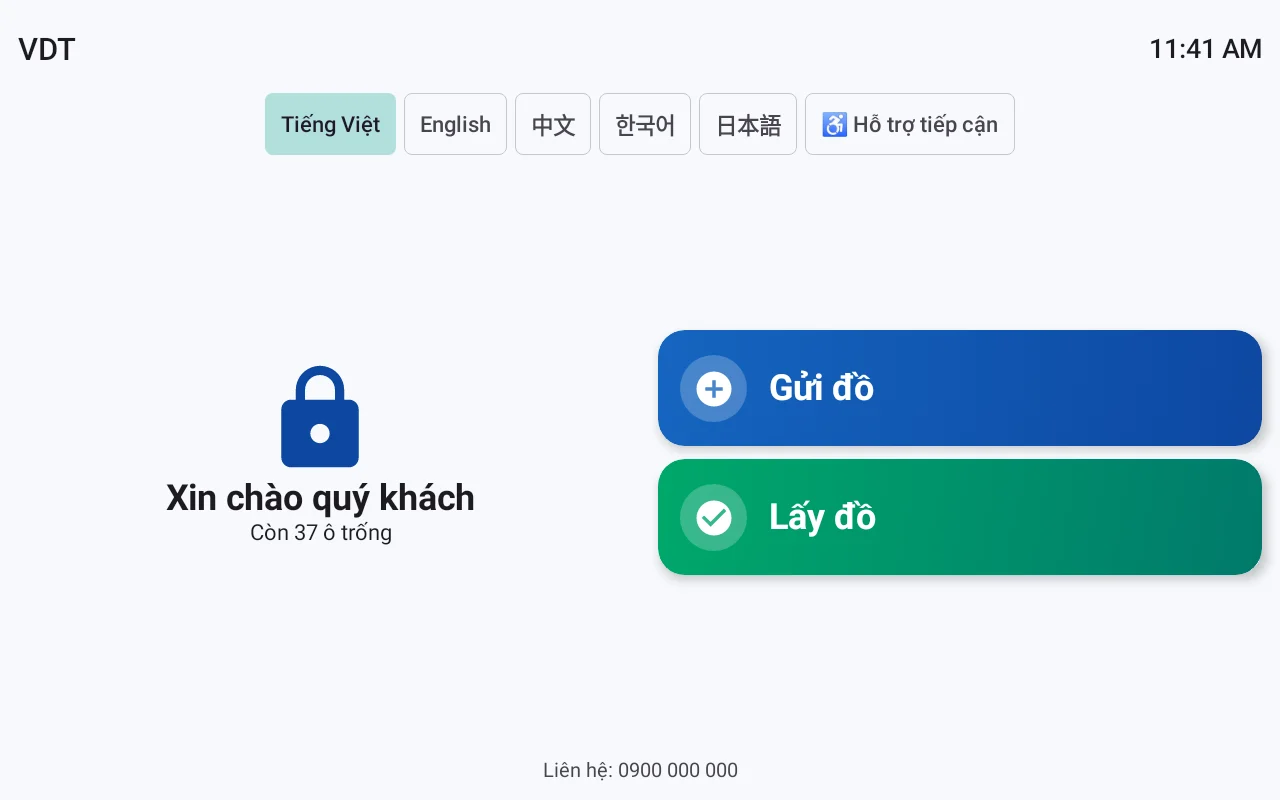
VDT Locker Smart Lockers: a single locker configurable as a storage locker, employee locker, parcel locker, asset lending locker, or payment collection locker. See solution and schedule a demo →
The volume of deliveries at apartments is rapidly increasing, while security guards and receptionists are not designed to perform the duties of shipping carriers. Packages piling up in lobbies, items lost after being signed for, long waits for shippers, and multiple redelivery attempts are recurring problems. Apartment parcel lockers separate deliveries from the reception area, reduce disputes, and free up personnel.
- Security guards/receptionists signing on behalf of residents: no authority, easily leads to lost items, no proof.
- Packages piling up in lobbies: unsightly, affects safety and fire prevention.
- Shippers waiting long, multiple redeliveries: increases operational costs, reduces service quality.
- 'Delivered or not' disputes: no logs, no photos, no timestamps.
- Residents working all day: unable to receive packages during business hours.
How Do Apartment Parcel Lockers Work?
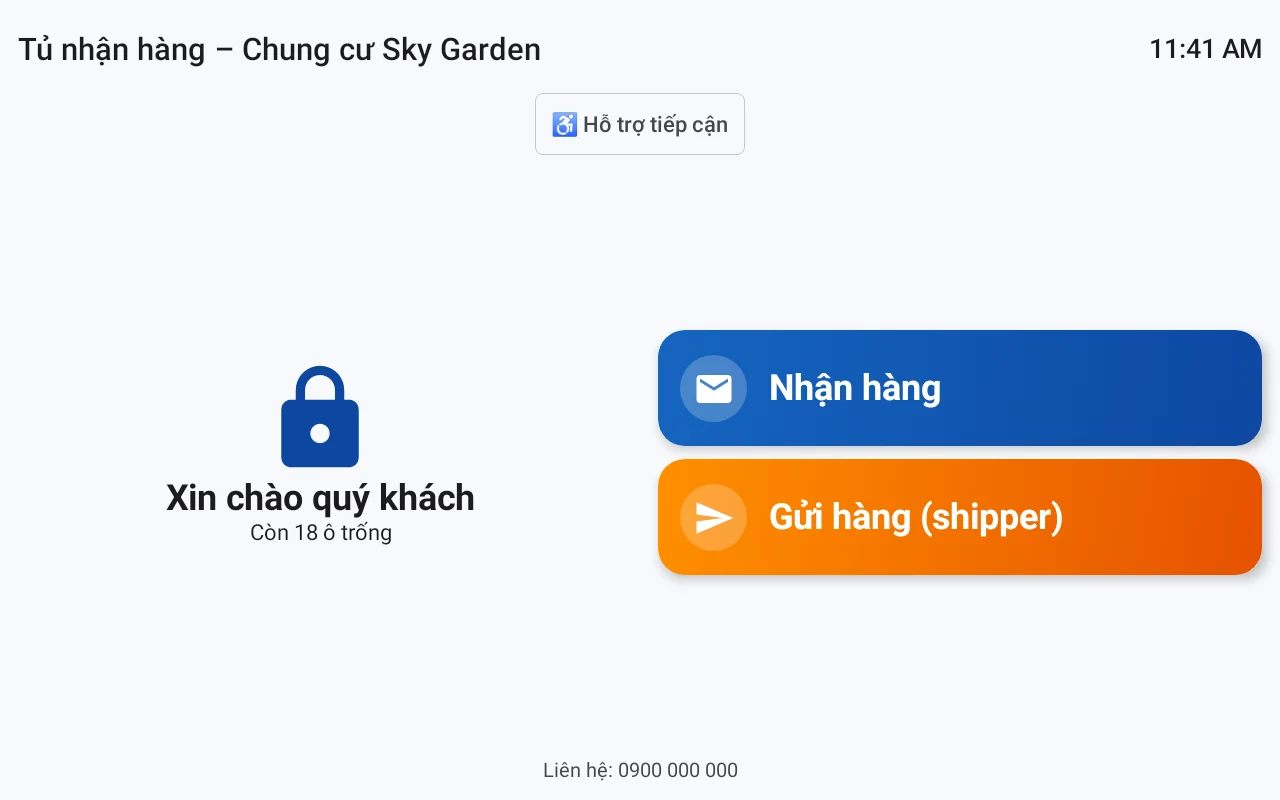
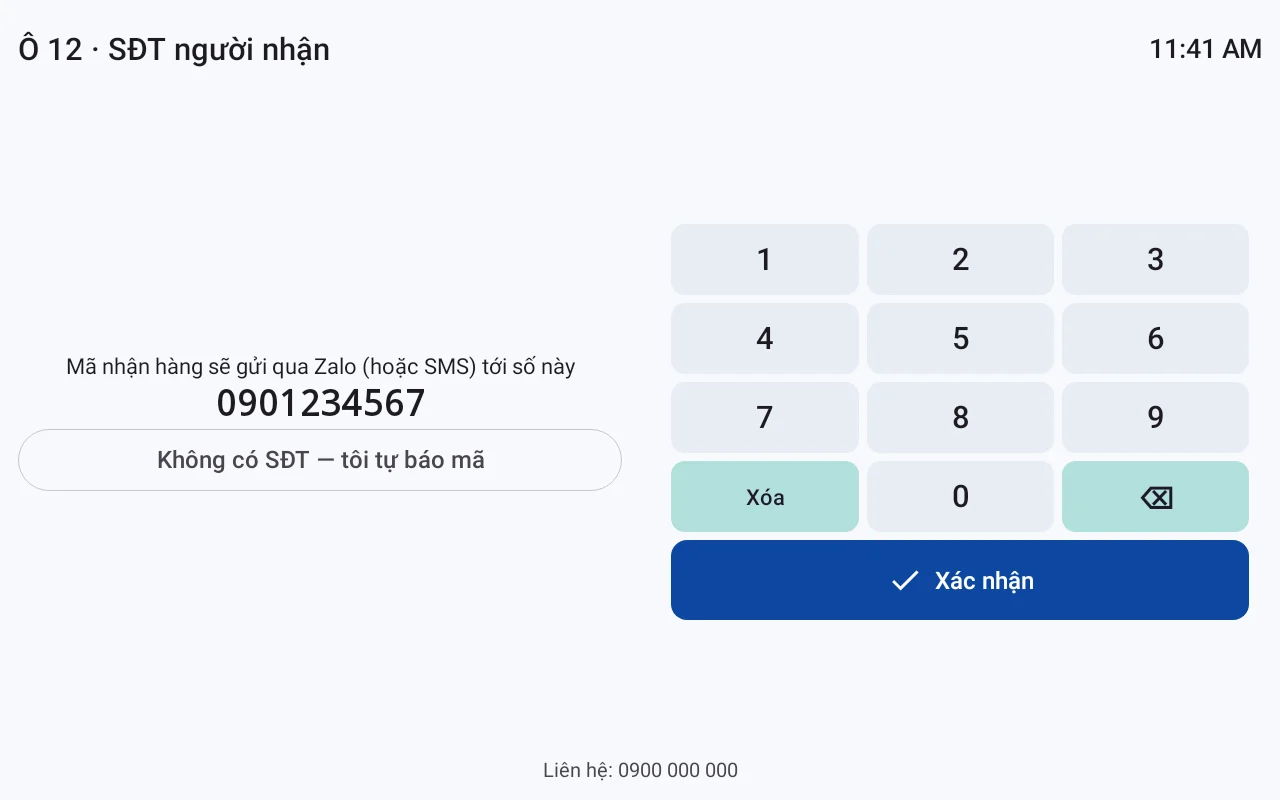
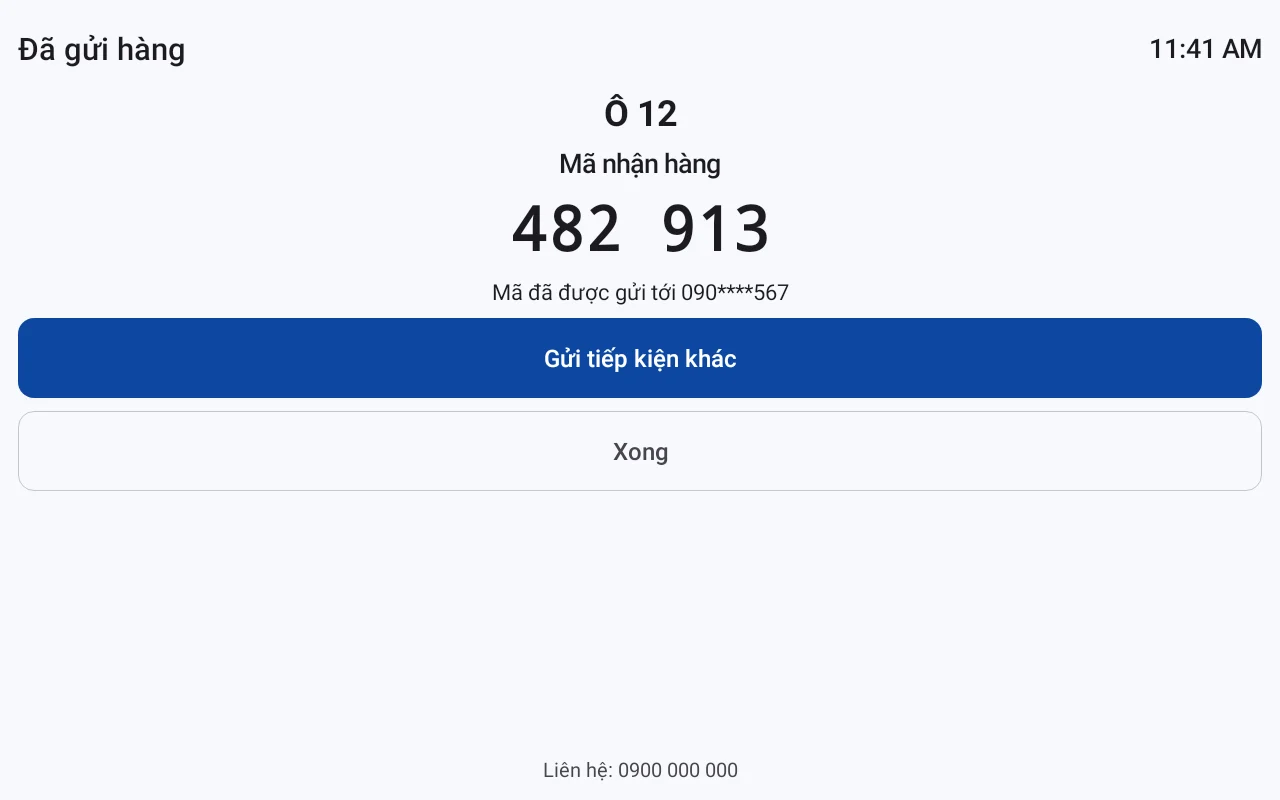
The process involves three steps: shippers scan the waybill and enter the recipient's phone number, the locker opens a suitable compartment; the system sends the locker access code via Zalo ZNS or SMS; residents go to the locker, enter the code, and retrieve the item. All operations are logged on the web management system, allowing management boards to look up any parcel.
Step 1 — Shipper Deposits Item
The shipper scans the waybill on the package, then enters the recipient's phone number. The software verifies and opens a locker compartment suitable for the package size. If a compartment is available, the locker opens immediately; otherwise, the system suggests another compartment or notifies the shipper to contact the management board.
Step 2 — Resident Receives Code
The system sends the locker access code via Zalo ZNS or SMS. Businesses need to register for a messaging package with the provider to ensure a high delivery rate. The code has an expiration time and includes reminders before it expires, helping residents remember to pick up their items.
Step 3 — Resident Retrieves Item
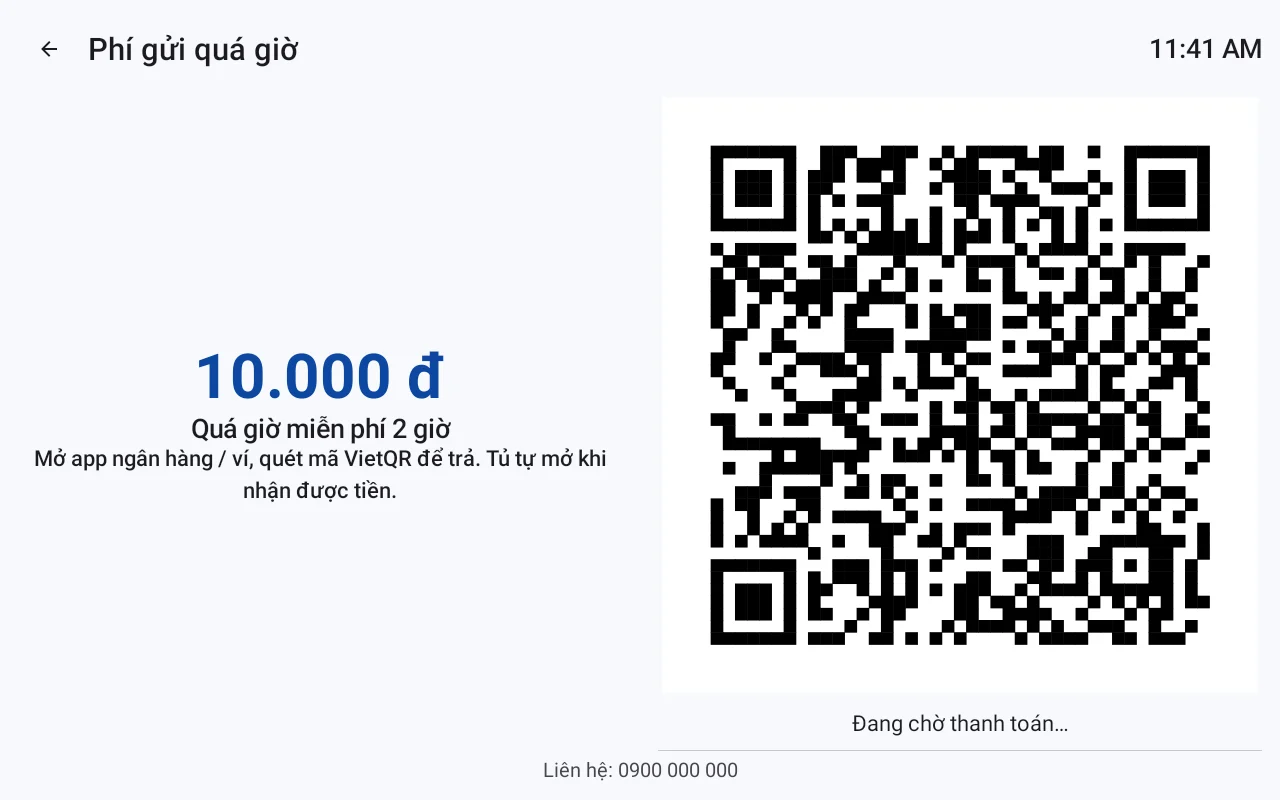
The resident goes to the locker, enters the code or scans the QR, the locker opens the compartment, and records the pickup time. If the item is overdue, the system notifies the shipper to retrieve the item directly from the locker, preventing package accumulation.
Essential Features When Choosing an Apartment Parcel Locker
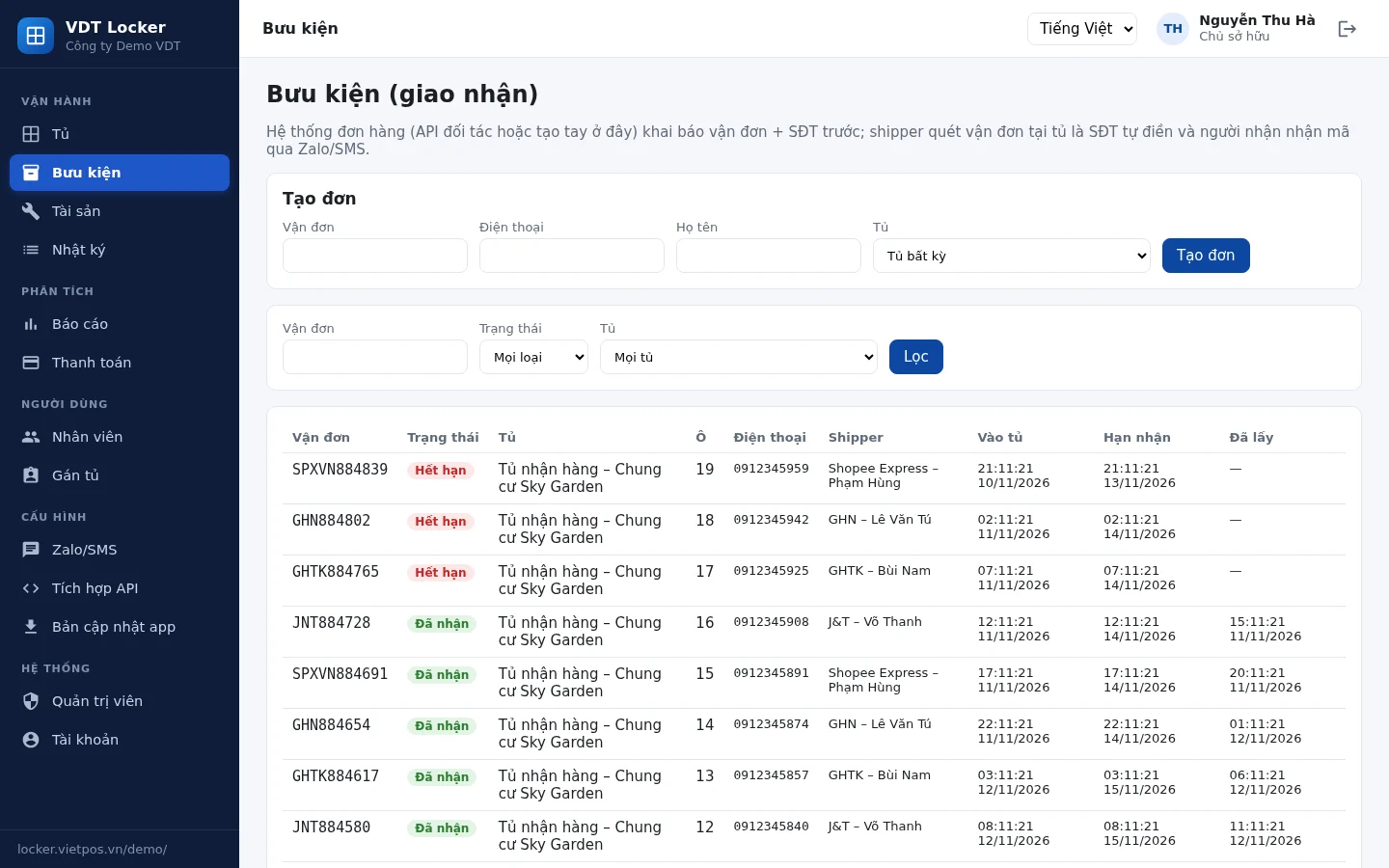
A parcel locker for practical apartment operations needs: code delivery via Zalo ZNS/SMS, pickup deadline reminders, a web system to track each parcel, an open API for resident apps and e-commerce platforms, offline operation capability, flexible configuration for usage models, and centralized multi-branch web management with 2-factor authentication.
- Code delivery via Zalo ZNS or SMS: businesses need to register for a messaging package to ensure a high delivery rate. Residents receive codes directly in their familiar Zalo app; SMS serves as a backup channel.
- Reminders before expiration: the system automatically sends reminders before the code expires, reducing the rate of accumulated items.
- Web tracking for each parcel: management boards can look up status, pickup deadline, shipper, and deposit/pickup times.
- API for resident apps, e-commerce platforms, shipping carriers: allows pre-creating orders, syncing status, reducing manual operations.
- Operates when offline: data is stored on the locker, synced when connectivity is restored, ensuring uninterrupted delivery.
- Flexible configuration: a single locker can change its usage model via settings, without hardware replacement.
- Centralized web management: monitors all lockers across all branches, with each business having its own dedicated link and 2-factor authentication.
Glossary of Terms and Examples
Below are common terms encountered when working with apartment parcel locker providers, along with brief definitions and practical examples for management boards to reference during their assessment.
| Term | Definition | Example |
|---|---|---|
| Parcel locker | Electronic locker for automated parcel reception | Locker placed in apartment lobby, shipper deposits items, residents pick up 24/7 |
| Zalo ZNS | Messaging service via Zalo, requires package registration | Sending locker access codes and pickup deadline reminders to residents |
| API | Application Programming Interface allowing system integration | Resident app pre-creates orders, e-commerce platform syncs status |
| Offline mode | Operating mode when network connection is lost | Locker still opens compartments, data stored locally, synced later |
| Centralized web management | Dashboard for monitoring multiple lockers | Management board views all lockers across branches, 2-factor authentication |
Common Mistakes When Deploying Apartment Parcel Lockers
Many projects fail not because the locker breaks down, but because the wrong operating model is chosen: no expiration reminders, no API, no web management, or no consideration for offline scenarios. Below are common mistakes to avoid.
- No pickup deadline reminders: accumulated items, shippers have to retrieve multiple times, resident complaints.
- No API: all operations must be done manually, cannot integrate with resident apps and e-commerce platforms.
- No centralized web management: management board doesn't know how many items are in which locker, or which shipper deposited them.
- Ignoring offline scenarios: locker stops operating when internet is lost, causing delivery bottlenecks.
- Choosing a fixed-model locker: wanting to change from parcel reception to item storage requires hardware replacement.
Specific Benefits for Management Boards and Residents
For management boards, apartment parcel lockers reduce the burden on security, minimize disputes, provide data for reconciliation, and enhance service scores. For residents, parcel reception becomes proactive 24/7, independent of business hours, with clear codes and expiration reminders.
- Reduces burden on security guards/receptionists: no need to sign on behalf of residents, no need to guard packages.
- Reduces disputes: includes deposit logs, pickup logs, timestamps, shipper information.
- Increases service score: residents receive items 24/7, even outside business hours.
- Operational data: provides insights into traffic, item types, shipping carriers.
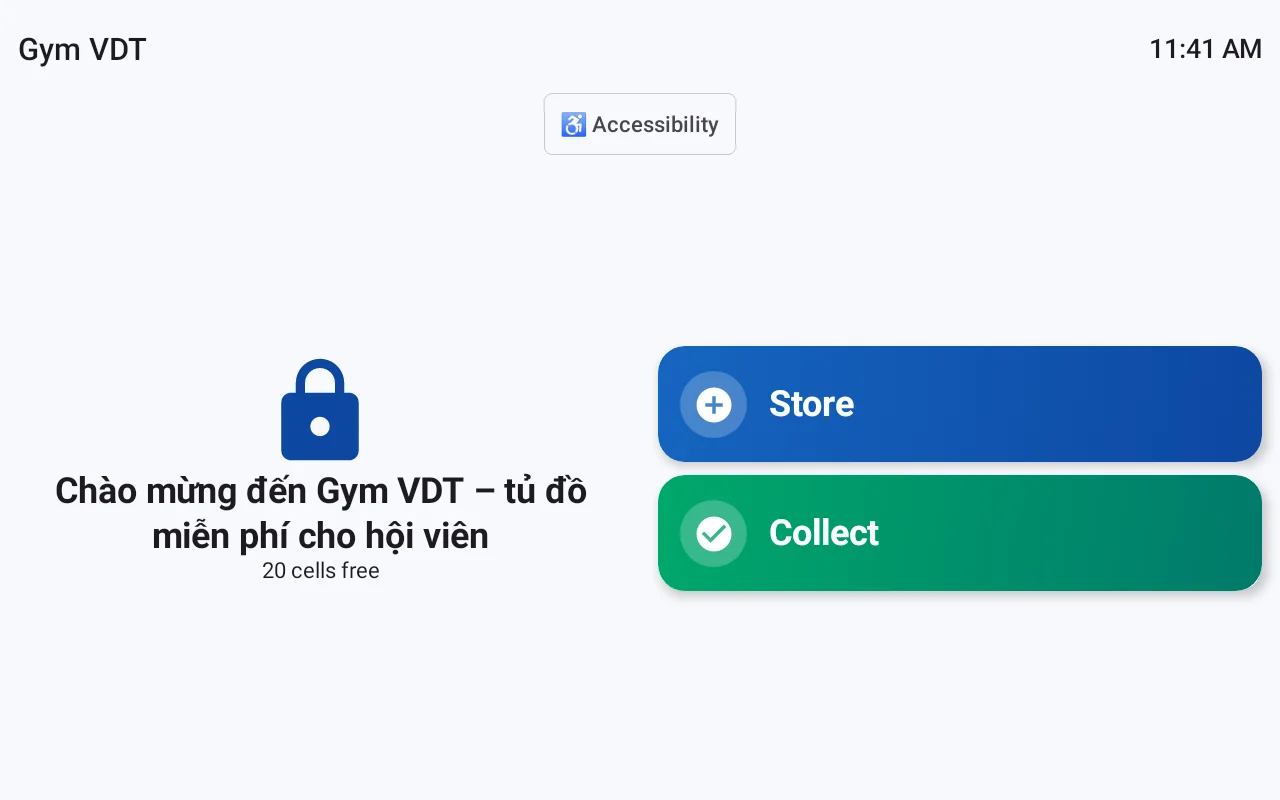
- Expands services: lockers can be used for item storage, laundry, food delivery, office supplies.
Frequently Asked Questions
Do apartment parcel lockers need internet?
The locker still operates when offline: data is stored on the locker, syncing when connectivity is restored. This ensures uninterrupted delivery in case of network issues.
How do shippers deposit items?
Shippers scan the waybill, enter the recipient's phone number, and the locker opens a suitable compartment. The system records the deposit time and shipper, helping management boards reconcile when needed.
How do residents receive codes?
Residents receive codes via Zalo ZNS or SMS. Businesses need to register for a messaging package with the provider to ensure a high delivery rate and receive reminders before expiration.
How are overdue items handled?
The system notifies the shipper to retrieve the item directly from the locker, preventing accumulation. Management boards can configure the storage duration according to their policies.
Can it be integrated with resident apps and e-commerce platforms?
Yes, via API. Resident apps can pre-create orders, receive notifications, and view history; e-commerce platforms and shipping carriers can sync order statuses, reducing manual operations.
How are multiple lockers across multiple branches managed?
Centralized web management monitors all lockers across all branches, with each business having its own dedicated link and 2-factor authentication. Management boards can assign permissions to different departments and look up delivery history.
Cần tư vấn thiết bị/giải pháp cụ thể?
Việt POS phản hồi trong 30 phút · Hotline 4 vùng · Khảo sát miễn phí.
Bài viết cùng chủ đề