Mục lục bài viết (10)
- Manufacturing challenges today
- How RFID manufacturing solutions work
- Specific benefits
- Application in electronics manufacturing
- Application in mechanical and automotive manufacturing
- Application in food and beverage (F&B) manufacturing
- RFID equipment cost comparison
- Related products and equipment
- Related articles
- Frequently asked questions
RFID in manufacturing is a solution using UHF wireless waves (860-960 MHz) to automatically identify and record the status of raw materials, work-in-progress (WIP), and finished products on the production line. According to MarketsandMarkets 2025 report, the global industrial RFID market reached $14.5 billion, with manufacturing accounting for 28% of revenue — reflecting urgent demand for automated traceability and WIP control at Vietnamese factories.
Manufacturing challenges today
- ⚠ Manual, slow, error-prone traceability: Paper records or barcode scanning of individual products takes 15-25 seconds per unit, prone to confusion when handling thousands of components daily.
- ⚠ Lost WIP control: Work-in-progress moves between stations without real-time position updates, causing loss or production bottlenecks lasting 3-5 days per month.
- ⚠ Time-consuming WIP inventory: Electronics and mechanical factories must stop production 2-4 hours per week for manual counting, disrupting production schedules.
- ⚠ Fails to meet FDI partner traceability requirements: Major brands (Samsung, LG, Nike) require traceability from raw material to each production stage; failure means lost orders.
How RFID manufacturing solutions work


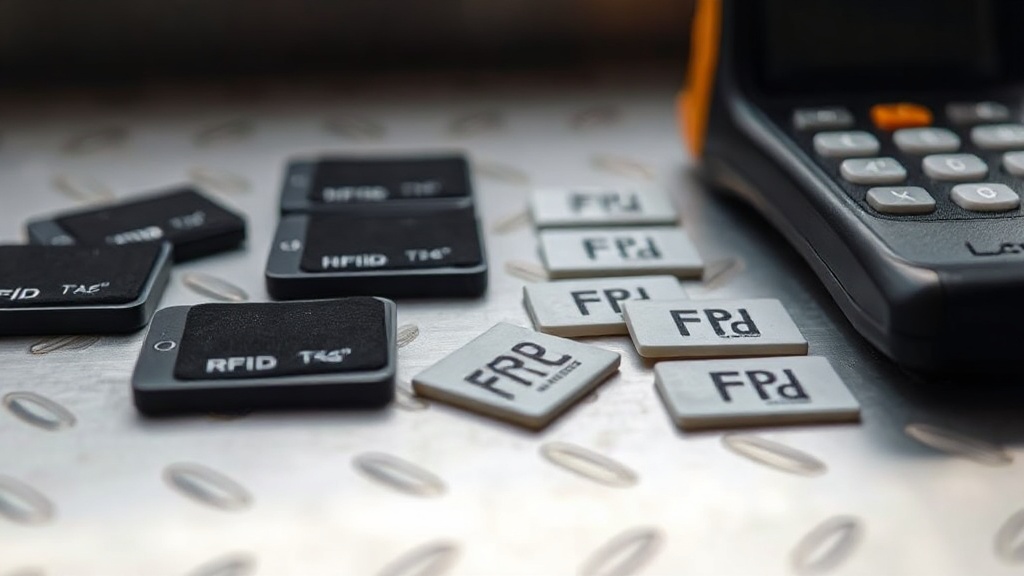
- RFID tagging: Each pallet of raw material, WIP tray, or finished product receives one heat- and oil-resistant UHF RFID tag (PVC plastic or fabric label) — globally unique ID code.
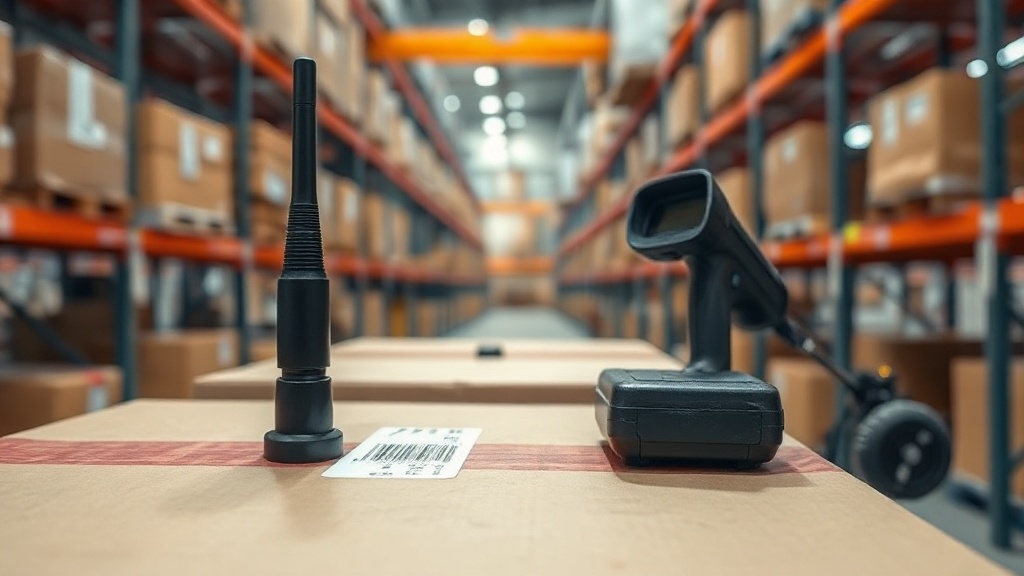
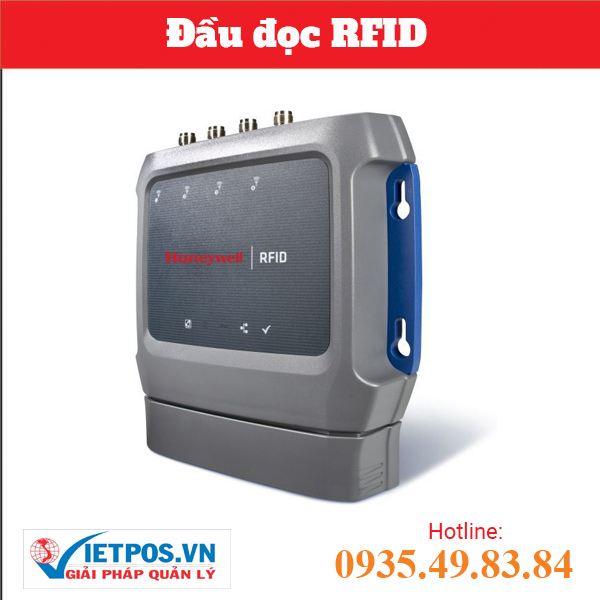
- Fixed reader installation: At checkpoints such as raw material warehouse entry, production stage entry/exit, install fixed RFID readers with antennas (Chainway UR4, UR8) to auto-scan when pallets pass (reading speed 200-500 tags/second).
- Real-time data collection: Each time WIP moves through a station, the system records time, location, status (machined, awaiting inspection) — syncs to MES/WMS software via API.
- Alerts and analysis: If WIP stays too long at one station (e.g., > 30 minutes), the system sends email/SMS alerts. Dashboard displays real-time throughput, enabling timely dispatch management.
- Traceability: Query movement history of each product by batch code — who machined it? which equipment? what time? — supports quality checks and partner reporting.
Specific benefits

70% reduction in WIP inventory time
From 2-4 hours per week down to 15-30 minutes — no production line stoppage needed.
Bạn đang tìm sản phẩm cho chủ đề này?
Việt POS phân phối chính hãng — bảo hành 24-36 tháng, hỗ trợ kỹ thuật 24/7.
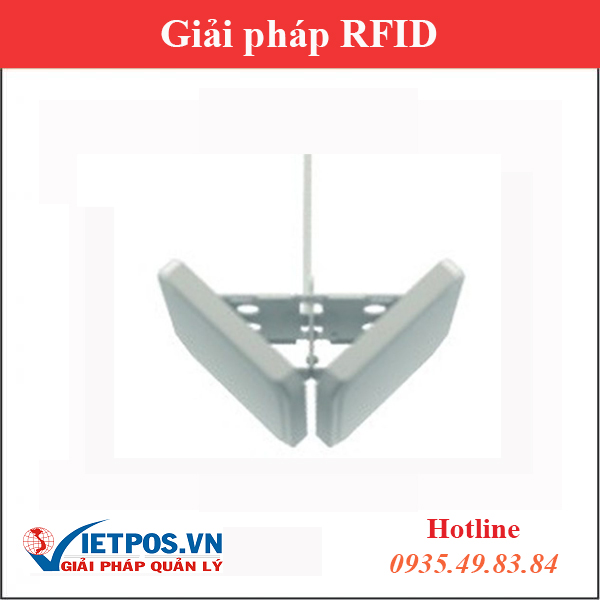
Zebra SR5502 RFID Antenna for Backroom and Warehouse
SKU: SR5502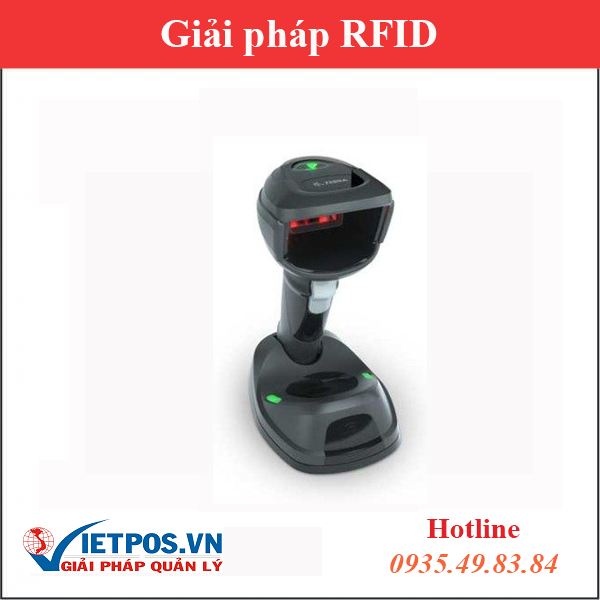
DS9900 handheld RFID reader for retail
SKU: DS9900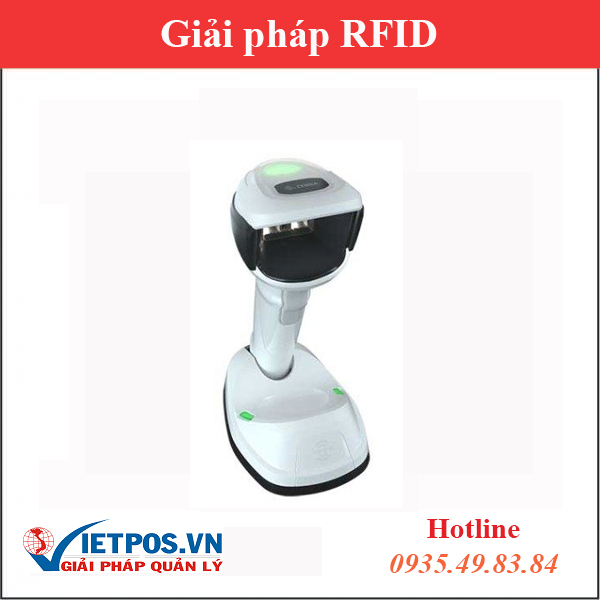
DS9900 Handheld RFID Reader for Laboratory
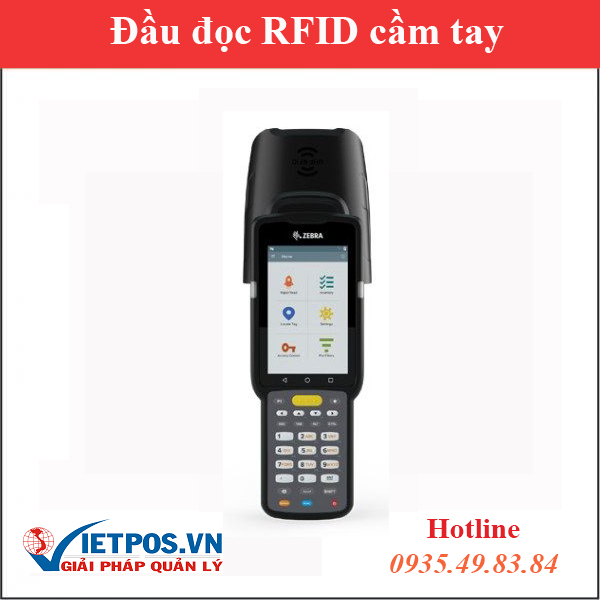
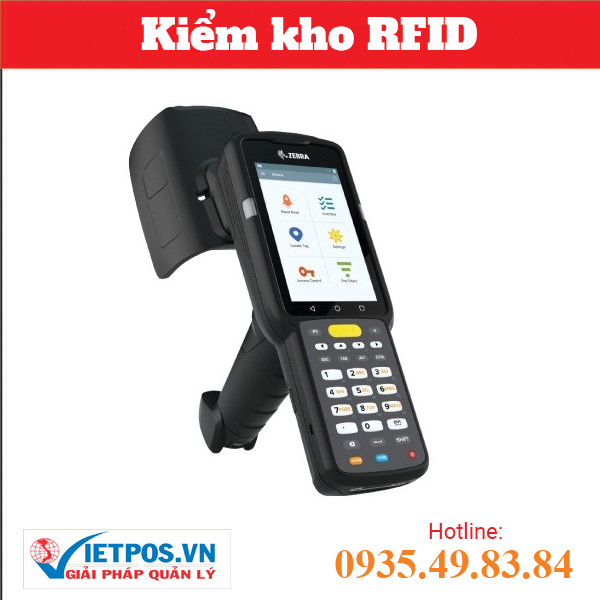
MC3300 Handheld RFID Reader
SKU: MC330099.8% traceability accuracy
Eliminates manual recording errors completely (current Vietnamese factory error rate 3-7%).
15-25% reduction in WIP loss
Real-time location tracking detects missing or stuck work-in-progress early.
12-18% throughput increase
Timely dispatch reduces bottlenecks at low-productivity stations.
Meets strict FDI audit requirements
Automated batch traceability reports achieve ISO 9001, IATF 16949, GMP standards.
ROI within 8-14 months
For facilities with 500-2,000 WIP daily, investment under 300 million VND, savings exceed 30 million VND monthly through labor and loss reduction.
Application in electronics manufacturing
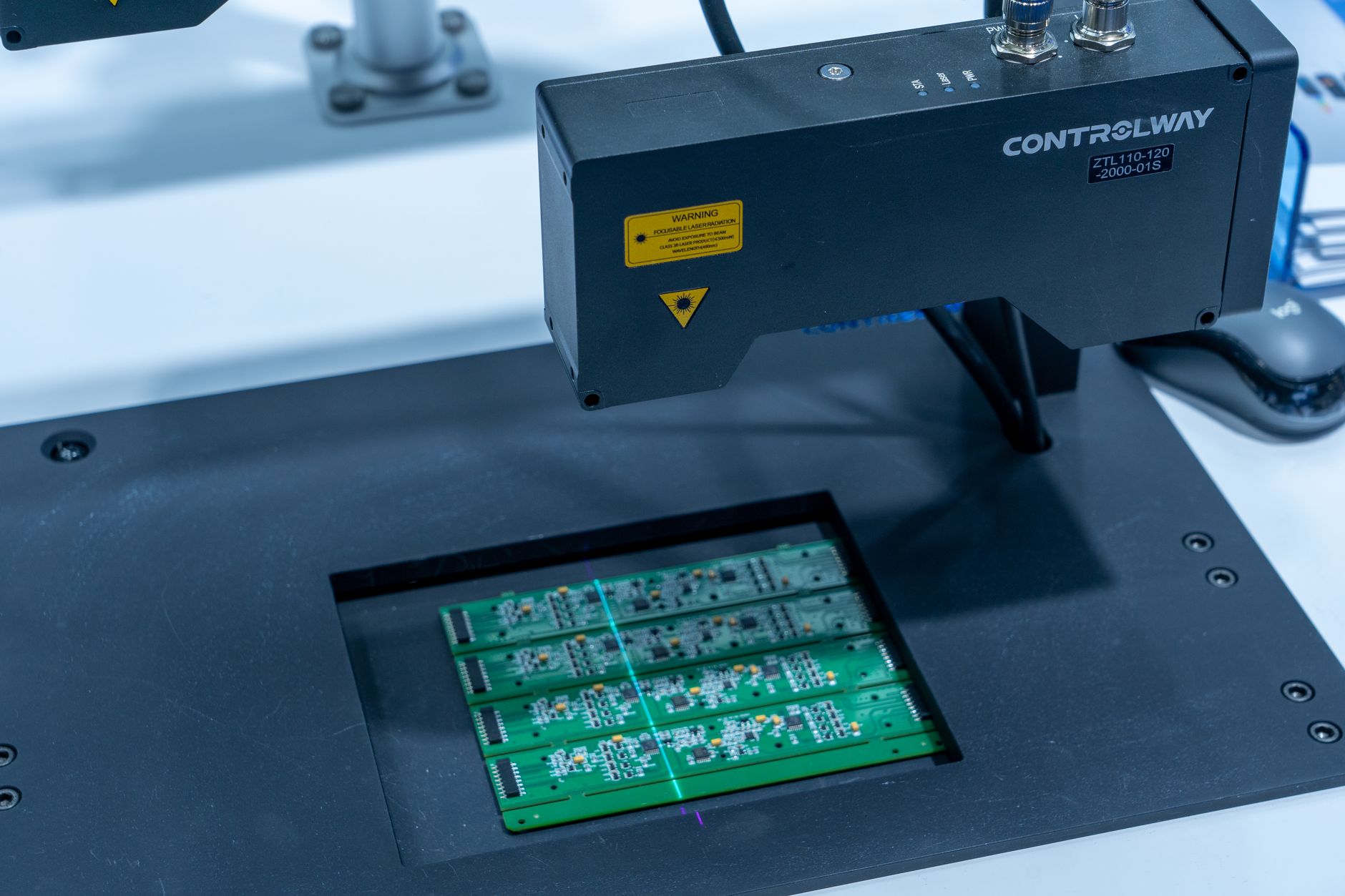
At electronics assembly plants (PCB, circuit board), RFID tags are attached to WIP magazines. When magazines move from SMT (chip placement) to AOI (optical inspection), fixed Chainway UR4 readers at automatic doors auto-record time and quantity. Result: 60% reduction in inter-stage waiting time, early detection of magazines stuck > 2 hours. The system also alerts if WIP exceeds inspection station capacity, enabling flexible staff allocation.
Application in mechanical and automotive manufacturing

Mechanical and automotive industries manage thousands of parts (pistons, camshafts, gears) moving through machining, heat treatment, and grinding stations. Heat-resistant UHF RFID tags (up to 200°C) are attached to pallets or component racks. Mobile Chainway C66 UHF readers let operators rapidly scan entire pallets (200-300 tags) in 3-5 seconds without stopping machines. Data syncs to MES, enabling engineers to accurately trace which furnace processed a material lot, at what temperature — supporting quality checks and warranty claims.
Application in food and beverage (F&B) manufacturing

Food processing facilities (seafood, canned goods, beer) require traceability from raw material intake to finished product shipping. UHF RFID tags on frozen material pallets (cold-resistant to -20°C) record intake time, expiration, and production batch. As raw materials move into preparation areas, fixed readers auto-update status to "processing." The system alerts if materials approach expiration (7 days remaining) to prioritize production first. Result: 25% reduction in waste from expired materials, compliance with major retailer audits.
RFID equipment cost comparison
| Component | Estimated cost (VND) | Notes |
|---|---|---|
| UHF RFID tag (PVC plastic label) | 1,500 - 3,000 per tag | Heat and oil resistant; quantity ≥ 10,000 tags |
| Chainway UR4 fixed reader (4 ports) | 18 - 25 million | Includes antenna; 6-10m read range |
| Chainway C66 UHF mobile reader | 22 - 30 million | Android 11/13, integrated 4G, camera |
| MES/WMS software integration | 40 - 120 million | Deployment + customization; 1-year license |
| Complete deployment (500m² facility) | 180 - 350 million | Includes 4 readers, 2 PDAs, 5,000 tags, software |
Related products and equipment
Related articles
- RFID application in retail: 10 management challenges and solutions 2026
- RFID for fashion retail: Increasing inventory accuracy from 70% to 99%
- UHF RFID application for warehouse inventory: 10x speed increase
- Comparison of RFID handheld PDAs and fixed readers for Vietnamese enterprises
- Manufacturers and suppliers of RFID labels in Bac Ninh, Binh Duong, Long An 2026
Frequently asked questions
How much does an RFID system investment cost for small factories (under 200 WIP daily)?
For small scale, cost is around 80-150 million VND, including 1-2 Chainway UR4 fixed readers, 1 Chainway C66 mobile PDA, 2,000 RFID tags, and basic management software. Expected payback is 10-14 months through labor savings and WIP loss reduction.
Can UHF RFID read through metal and liquids?
Standard UHF RFID tags face difficulty reading when mounted directly on metal surfaces or near liquids. Solution is to use on-metal tags with isolation padding, or heat-resistant tags with special plastic housing. Cost is 20-40% higher than standard tags. Việt POS supplies on-metal tag lines for mechanical and automotive factories.
Can RFID systems integrate with existing MES/WMS software?
Yes. Chainway readers support RESTful API, MQTT, and Android/iOS SDKs to connect with MES software (SAP, Oracle, or proprietary MES). Việt POS successfully integrated for 12 factories using different WMS systems. Average integration time is 2-4 weeks depending on target system complexity.
What warranty and technical support is available for RFID equipment?
Genuine Chainway RFID equipment at Việt POS carries 12-month warranty (readers, PDAs) and 6-month warranty (tags). Remote technical support during business hours; optional maintenance contracts available. Việt POS has technical teams in Hanoi, Ho Chi Minh City, and Da Nang, ready for onsite support within 24-48 hours.
RFID vs. barcode for manufacturing management — which is better?
Barcode suits small enterprises with tight budgets (tag cost ~200-500 VND) but requires scanning each product, taking 2-3 seconds per scan, error-prone. UHF RFID has higher upfront cost (tags 1,500-3,000 VND + readers) but reads 300 tags/second simultaneously, requires no line-of-sight, 99.8% accuracy. For facilities with 500+ WIP daily, RFID delivers superior ROI after 12 months.
Must current production processes change when deploying RFID?
No major changes needed. RFID system overlays existing processes: only add tagging step at raw material warehouse entry and reader installation at checkpoints. Staff trained 1-2 days to use PDA and dashboard. Việt POS provides standard deployment procedures for 4 industries: electronics, mechanical, food, textiles.
Can RFID tags be reused? What is their lifespan?
Passive UHF RFID tags have no battery, lifespan up to 10 years if not physically damaged. In factory environments, tags typically last 2-4 years (heat, oil, vibration exposure). Tags can be reused if carefully removed and previous data erased (some lines allow 100,000 rewrites). Việt POS recommends fresh tags for each raw material batch to ensure traceability accuracy.
How to ensure RFID data is not corrupted or misread?
System uses Impinj E Series chip anti-collision algorithms, allowing simultaneous read of 500 tags in 1 second without duplication. Readers are configured with narrow read zones (2-3m) to avoid cross-reading from adjacent areas. Weekly checks and antenna angle adjustments maintain accuracy. Việt POS guides data validation procedures twice daily during first deployment month.
Cần tư vấn thiết bị/giải pháp cụ thể?
Việt POS phản hồi trong 30 phút · Hotline 4 vùng · Khảo sát miễn phí.
Bài viết cùng chủ đề