Mục lục bài viết (14)
- #What are supermarket barcode printing scales and how do they work?
- #What are the common types of barcode printing scales for supermarkets today?
- #What features do supermarket barcode printing scales need to operate efficiently?
- #What is the cost of installing and deploying supermarket barcode printing scales?
- #How do supermarket barcode printing scales integrate with POS?
- #What should be considered when choosing barcode printing scales for Vietnamese supermarkets?
- #Next Steps
- #What features do supermarket barcode printing scales need to operate efficiently?
- #What is the cost of installing and deploying supermarket barcode printing scales?
- #How do supermarket barcode printing scales integrate with POS?
- #What should be considered when choosing barcode printing scales for Vietnamese supermarkets?
- #Next Steps
- Related Products
- Related Articles
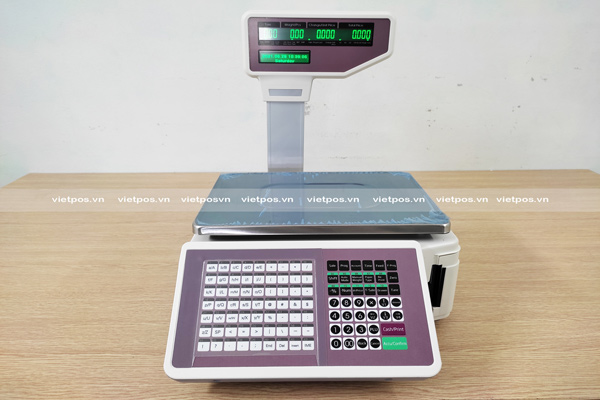
Supermarket barcode printing scales are electronic devices specifically designed for retail stores, supermarkets, grocery chains, and distribution agents. This equipment combines three main functions: weighing goods, printing barcode labels, and calculating payments — helping to shorten processing time at the counter by 30-50% compared to manual processes.
Based on Việt POS's experience in implementing solutions for supermarkets and retail chains in Vietnam, barcode printing scales not only accelerate checkout but also reduce pricing errors, support automated inventory management, and provide real-time sales data for warehouse management.
What are supermarket barcode printing scales and how do they work?
Supermarket barcode printing scales are electronic devices that integrate weighing, barcode printing, and payment calculation in one unit. Sales staff place products on the scale, which automatically identifies the item code from the database, prints a barcode label with the selling price, weight, and product information, calculates the total, and sends data to the central POS system.
The operational process includes the following steps:
- Staff scan the item code or enter the product code into the scale.
- The scale automatically retrieves price and product name information from the POS database.
- Customers place items on the weighing pan; the device displays the weight and automatically calculates the price.
- A barcode label is printed with the item code, weight, selling price, and expiration date (if applicable).
- Sales data is sent to the warehouse management system and central POS.
What are the common types of barcode printing scales for supermarkets today?
The Vietnamese supermarket barcode printing scale market currently features three main categories: basic barcode printing scales (5-8 million VND), standard barcode printing scales (10-18 million VND), and high-end AI-integrated barcode printing scales (20-35 million VND). Each category is suitable for different store sizes and management features.
Bạn đang tìm sản phẩm cho chủ đề này?
Việt POS phân phối chính hãng — bảo hành 24-36 tháng, hỗ trợ kỹ thuật 24/7.
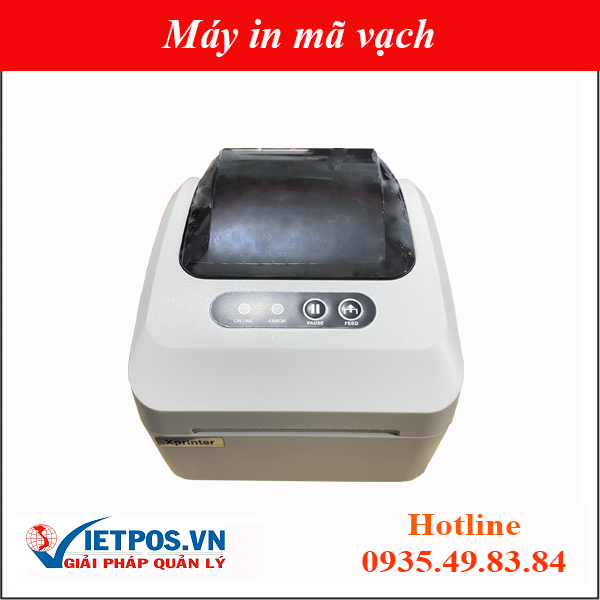
Xprinter XP-350 Plus Barcode Printer (Barcode + Bill Printing)
SKU: XP-350
Barcode Label Printing Software - BarTender - Basic
SKU: BARTENDER BASIC
Bartender Automation Barcode Printing Software
SKU: BARTENDER AUTOMATION
RLS1000/RLS1100 Barcode Printing Scale
SKU: RLS1000/RLS1100Are you looking for products on this topic?
Việt POS is an official distributor — 24-36 month warranty, 24/7 technical support.
| Product Line | Key Features | Suitable Scale | Reference Price |
|---|---|---|---|
| Basic Scales | Simple barcode printing, max weight 6-15 kg, USB/Ethernet connectivity | Grocery stores, small retail stores | 5-8 million |
| Standard Scales | Color barcode printing, integrated POS, inventory management, max weight 15-30 kg | Supermarkets, chain stores with 3-10 branches | 10-18 million |
| High-end Scales | AI product recognition, dynamic barcode printing, real-time sales reports, max weight 30-50 kg | Large supermarkets, retail chains with 10+ branches | 20-35 million |
Popular vendors supplying the Vietnamese market include Bizerba (Germany), Mettler-Toledo (Switzerland), Dibal (Spain), and Digi (Netherlands). Each vendor has its own strengths: Bizerba excels in durability and technical support, Mettler-Toledo in weighing accuracy, Dibal in color barcode printing features, and Digi in competitive pricing for medium-sized supermarkets.
What features do supermarket barcode printing scales need to operate efficiently?
Supermarket barcode printing scales require at least 5 key features: (1) automatic barcode printing with high resolution, (2) POS and inventory management system connectivity, (3) accurate weighing of ±5-10g, (4) an easy-to-use keypad or touchscreen, and (5) real-time sales reporting and expiration date management.
- Automatic Barcode Printing: The scale must be able to print 1D (Code128, EAN13) and 2D (QR code) barcodes with a resolution of ≥203 DPI, printing speed of ≥100 mm/s, and support for label paper 50-100 mm wide.
- POS and Inventory Management Connectivity: Supports Ethernet, WiFi, USB for integration with POS software, inventory management systems, and sales reporting. The scale must synchronize product data, selling prices, and expiration dates from the central database.
- Weighing Accuracy: The scale must meet OIML (Organization of Legal Metrology) standards with an error margin of ±5-10g depending on the product type. This ensures legal compliance when selling by weight.
- User Interface: An LCD or 7-10 inch touchscreen, easy-to-read numeric keypad, Vietnamese language support, allowing staff to quickly enter item codes, view prices, and weights.
- Expiration Date Management: The scale must be able to print expiration dates, manufacturing dates, and batch numbers on barcode labels. It should support alerts for expiring goods to prevent selling expired products.
What is the cost of installing and deploying supermarket barcode printing scales?
The cost of deploying supermarket barcode printing scales consists of 3 parts: (1) purchasing scales for 8-25 million VND/unit, (2) installation and configuration for 2-5 million VND/unit, and (3) staff training for 1-3 million VND. The total cost for a medium-sized supermarket (5-10 counters) is 60-150 million VND, with an ROI within 12-18 months due to reduced pricing errors and increased checkout speed.
Detailed costs:
- Scale Purchase: Basic scales 5-8 million VND, standard scales 10-18 million VND, high-end scales 20-35 million VND. Prices may be reduced by 10-15% when purchasing in large quantities (≥5 units).
- Installation and Configuration: Việt POS technical team installs scales, connects POS, configures product databases, and tests barcode printing — cost 2-5 million VND/unit depending on system complexity.
- Staff Training: Instructing sales staff on how to use the scale, print barcodes, and troubleshoot issues — cost 1-3 million VND for all counter staff.
- Barcode Label Paper: Monthly cost 500k-2 million VND depending on the volume of goods sold (estimated 0.5-1 VND/label).
ROI Period: Medium-sized supermarkets (5-10 counters) can recover their investment within 12-18 months by reducing pricing errors (30-50% reduction in losses), increasing checkout speed (30-50% reduction in counter time), and optimizing inventory management (15-25% reduction in inventory).
How do supermarket barcode printing scales integrate with POS?
Barcode printing scales integrate with POS via Ethernet or WiFi, allowing the scale to receive product data from the central POS system and send real-time sales data back. The integration process includes: (1) configuring scale and POS IPs on the same network, (2) installing scale drivers on the POS machine, and (3) synchronizing product, price, and expiration date databases.
Benefits of POS integration:
- Product Data Synchronization: The scale automatically downloads product lists, selling prices, and expiration dates from the central POS. When prices are updated on the POS, all scales will update automatically within 5-10 minutes.
- Real-time Sales Reporting: Sales data from the scale is sent to the POS immediately, allowing management to view sales, quantities sold, and inventory in real-time.
- Automated Expiration Date Management: The scale alerts for expiring goods, automatically discounts them, or blocks the sale of expired products according to POS configuration.
- Reduced Pricing Errors: The scale automatically retrieves prices from the POS, eliminating manual price entry errors by staff, reducing losses by 30-50%.
What should be considered when choosing barcode printing scales for Vietnamese supermarkets?
When choosing supermarket barcode printing scales, 5 criteria should be considered: (1) OIML-standard weighing accuracy, (2) barcode printing speed ≥100 mm/s, (3) Vietnamese language support and POS integration, (4) local technical support, and (5) a price that fits the budget and offers an ROI of 12-18 months.
- Weighing Accuracy: Choose scales that meet OIML Class III or IV standards, with an error margin of ±5-10g. Check calibration certificates from the manufacturer or Vietnamese metrology agencies.
- Barcode Printing Speed: Choose scales with printing speeds of ≥100 mm/s to shorten label printing time and avoid counter congestion. Check for a printing resolution of ≥203 DPI for clear, easy-to-scan barcodes.
- Vietnamese Language Support and POS Integration: Ensure the scale supports a Vietnamese interface and can integrate with popular POS software in Vietnam (Misa, Haravan, Sapo, etc.). Request the vendor to provide APIs or integration drivers.
- Local Technical Support: Choose a vendor with offices or agents in Vietnam, offering quick warranty and repair support. Avoid scales without local support, as this will lead to difficulties when repairs are needed.
- Budget-Friendly Price and ROI: Calculate ROI based on store size, sales volume, and staff costs. Choose scales with an ROI of 12-18 months to ensure investment efficiency.
Next Steps
Việt POS technical team provides free surveys and consultations to help you choose the right barcode printing scale configuration for your supermarket's scale, inventory management features, and budget. Contact hotline 0935 498 384 or refer to:
Are you looking for products on this topic?
Việt POS is an official distributor — 24-36 month warranty, 24/7 technical support.
| Product Line | Key Features | Suitable Scale | Reference Price |
|---|---|---|---|
| Basic Scales | Simple barcode printing, max weight 6-15 kg, USB/Ethernet connectivity | Grocery stores, small retail stores | 5-8 million |
| Standard Scales | Color barcode printing, integrated POS, inventory management, max weight 15-30 kg | Supermarkets, chain stores with 3-10 branches | 10-18 million |
| High-end Scales | AI product recognition, dynamic barcode printing, real-time sales reports, max weight 30-50 kg | Large supermarkets, retail chains with 10+ branches | 20-35 million |
Popular vendors supplying the Vietnamese market include Bizerba (Germany), Mettler-Toledo (Switzerland), Dibal (Spain), and Digi (Netherlands). Each vendor has its own strengths: Bizerba excels in durability and technical support, Mettler-Toledo in weighing accuracy, Dibal in color barcode printing features, and Digi in competitive pricing for medium-sized supermarkets.
What features do supermarket barcode printing scales need to operate efficiently?
Supermarket barcode printing scales require at least 5 key features: (1) automatic barcode printing with high resolution, (2) POS and inventory management system connectivity, (3) accurate weighing of ±5-10g, (4) an easy-to-use keypad or touchscreen, and (5) real-time sales reporting and expiration date management.
- Automatic Barcode Printing: The scale must be able to print 1D (Code128, EAN13) and 2D (QR code) barcodes with a resolution of ≥203 DPI, printing speed of ≥100 mm/s, and support for label paper 50-100 mm wide.
- POS and Inventory Management Connectivity: Supports Ethernet, WiFi, USB for integration with POS software, inventory management systems, and sales reporting. The scale must synchronize product data, selling prices, and expiration dates from the central database.
- Weighing Accuracy: The scale must meet OIML (Organization of Legal Metrology) standards with an error margin of ±5-10g depending on the product type. This ensures legal compliance when selling by weight.
- User Interface: An LCD or 7-10 inch touchscreen, easy-to-read numeric keypad, Vietnamese language support, allowing staff to quickly enter item codes, view prices, and weights.
- Expiration Date Management: The scale must be able to print expiration dates, manufacturing dates, and batch numbers on barcode labels. It should support alerts for expiring goods to prevent selling expired products.
What is the cost of installing and deploying supermarket barcode printing scales?
The cost of deploying supermarket barcode printing scales consists of 3 parts: (1) purchasing scales for 8-25 million VND/unit, (2) installation and configuration for 2-5 million VND/unit, and (3) staff training for 1-3 million VND. The total cost for a medium-sized supermarket (5-10 counters) is 60-150 million VND, with an ROI within 12-18 months due to reduced pricing errors and increased checkout speed.
Detailed costs:
- Scale Purchase: Basic scales 5-8 million VND, standard scales 10-18 million VND, high-end scales 20-35 million VND. Prices may be reduced by 10-15% when purchasing in large quantities (≥5 units).
- Installation and Configuration: Việt POS technical team installs scales, connects POS, configures product databases, and tests barcode printing — cost 2-5 million VND/unit depending on system complexity.
- Staff Training: Instructing sales staff on how to use the scale, print barcodes, and troubleshoot issues — cost 1-3 million VND for all counter staff.
- Barcode Label Paper: Monthly cost 500k-2 million VND depending on the volume of goods sold (estimated 0.5-1 VND/label).
ROI Period: Medium-sized supermarkets (5-10 counters) can recover their investment within 12-18 months by reducing pricing errors (30-50% reduction in losses), increasing checkout speed (30-50% reduction in counter time), and optimizing inventory management (15-25% reduction in inventory).
How do supermarket barcode printing scales integrate with POS?
Barcode printing scales integrate with POS via Ethernet or WiFi, allowing the scale to receive product data from the central POS system and send real-time sales data back. The integration process includes: (1) configuring scale and POS IPs on the same network, (2) installing scale drivers on the POS machine, and (3) synchronizing product, price, and expiration date databases.
Benefits of POS integration:
- Product Data Synchronization: The scale automatically downloads product lists, selling prices, and expiration dates from the central POS. When prices are updated on the POS, all scales will update automatically within 5-10 minutes.
- Real-time Sales Reporting: Sales data from the scale is sent to the POS immediately, allowing management to view sales, quantities sold, and inventory in real-time.
- Automated Expiration Date Management: The scale alerts for expiring goods, automatically discounts them, or blocks the sale of expired products according to POS configuration.
- Reduced Pricing Errors: The scale automatically retrieves prices from the POS, eliminating manual price entry errors by staff, reducing losses by 30-50%.
What should be considered when choosing barcode printing scales for Vietnamese supermarkets?
When choosing supermarket barcode printing scales, 5 criteria should be considered: (1) OIML-standard weighing accuracy, (2) barcode printing speed ≥100 mm/s, (3) Vietnamese language support and POS integration, (4) local technical support, and (5) a price that fits the budget and offers an ROI of 12-18 months.
- Weighing Accuracy: Choose scales that meet OIML Class III or IV standards, with an error margin of ±5-10g. Check calibration certificates from the manufacturer or Vietnamese metrology agencies.
- Barcode Printing Speed: Choose scales with printing speeds of ≥100 mm/s to shorten label printing time and avoid counter congestion. Check for a printing resolution of ≥203 DPI for clear, easy-to-scan barcodes.
- Vietnamese Language Support and POS Integration: Ensure the scale supports a Vietnamese interface and can integrate with popular POS software in Vietnam (Misa, Haravan, Sapo, etc.). Request the vendor to provide APIs or integration drivers.
- Local Technical Support: Choose a vendor with offices or agents in Vietnam, offering quick warranty and repair support. Avoid scales without local support, as this will lead to difficulties when repairs are needed.
- Budget-Friendly Price and ROI: Calculate ROI based on store size, sales volume, and staff costs. Choose scales with an ROI of 12-18 months to ensure investment efficiency.
Next Steps
Việt POS technical team provides free surveys and consultations to help you choose the right barcode printing scale configuration for your supermarket's scale, inventory management features, and budget. Contact hotline 0935 498 384 or refer to:
Need advice on specific equipment/solutions?
Việt POS responds within 30 minutes · 4 regional hotlines · Free survey.
Related Products
Related Articles

Cần tư vấn thiết bị/giải pháp cụ thể?
Việt POS phản hồi trong 30 phút · Hotline 4 vùng · Khảo sát miễn phí.
Bài viết cùng chủ đề