Mục lục bài viết (9)
- #What are barcodes and numbering systems, and why must businesses use them?
- #What are the common barcode and numbering standards worldwide?
- #What are the current barcode and numbering regulations in Vietnam?
- #How to accurately scan and check barcodes and numbering systems?
- #How do 2D barcodes (QR Code) differ from traditional 1D barcodes?
- #How to avoid legal risks related to barcodes and numbering systems?
- #Next steps
- Related products
- Articles on the same topic
Barcodes and numbering systems are global product identifiers, appearing on nearly 100% of consumer goods from confectionery, clothing to electronic devices. Each barcode contains information about origin, provenance, selling price and production history — helping consumers verify quality, while allowing businesses to manage inventory, prevent counterfeiting and ensure legal compliance.
In Vietnam, barcode and numbering regulations are governed by GS1 Vietnam (an international GS1 branch) and Decree 13/2023 on imported goods management. Retail, manufacturing and distribution businesses must comply with these standards to avoid fines ranging from 5-50 million VND.
What are barcodes and numbering systems, and why must businesses use them?
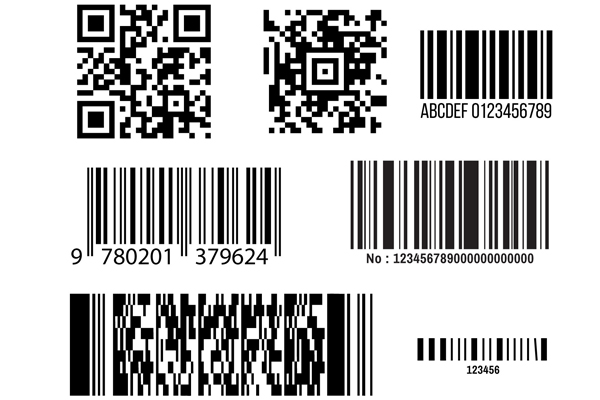
Barcodes and numbering systems are sequences of numbers encoded into geometric symbols (black-and-white bars or 2D codes), allowing scanners to quickly read product information. Each barcode is a unique global identifier, non-duplicative, helping businesses track goods from warehouse to retail point with 99.9% accuracy.
Key benefits of barcodes and numbering systems:
- Automated inventory management — reduces losses by 20-35% compared to manual inventory.
- Speeds up checkout — each product scans in 0.5-1 second instead of manual entry.
- Prevents counterfeiting — customers verify barcodes via the GS1 database.
- Legal compliance — mandatory for imported goods, retail goods in supermarkets.
- System integration — connects with POS, ERP, sales management without manual data entry.
What are the common barcode and numbering standards worldwide?
International barcode standards include EAN-13 (13 digits, common in Europe, Asia), UPC-A (12 digits, North America), Code 128 (used for logistics), and 2D QR Code (stores larger data). In Vietnam, EAN-13 is the main mandatory standard.
Bạn đang tìm sản phẩm cho chủ đề này?
Việt POS phân phối chính hãng — bảo hành 24-36 tháng, hỗ trợ kỹ thuật 24/7.
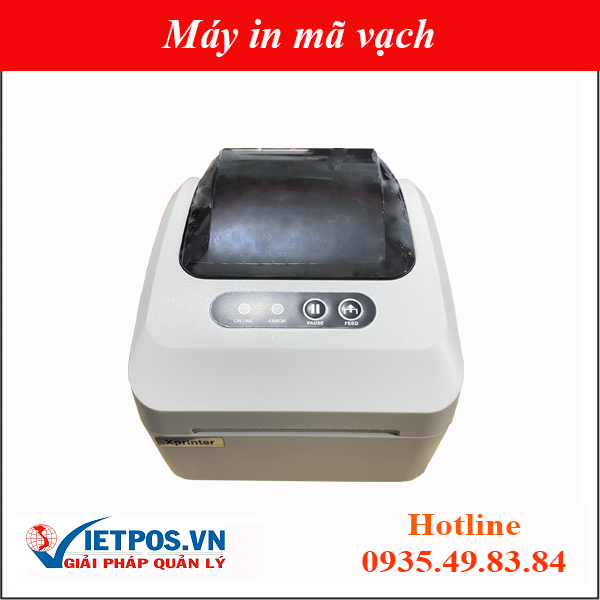
Xprinter XP-350 Plus Barcode Printer (Barcode + Bill Printing)
SKU: XP-350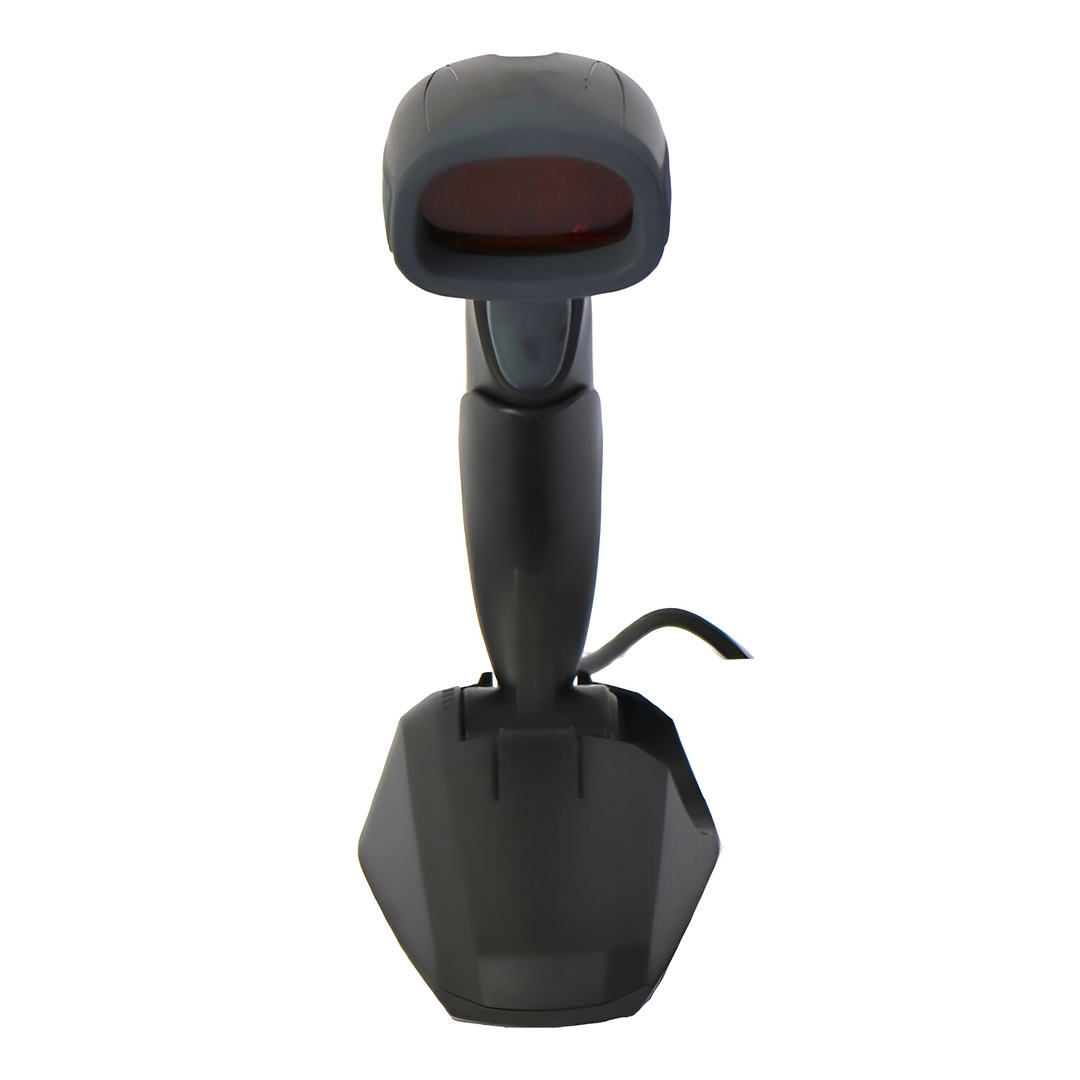
Barcode Scanner SI-2500 (1D & 2D)

KIO-KP350BM Barcode Printer
SKU: KIO-KP350BM
Thermal Barcode Printer KP-355A Plus
SKU: KP-355AAre you looking for products for this topic?
Việt POS is an authorized distributor — 24-36 month warranty, 24/7 technical support.
| Standard | Number of digits | Primary region | Application |
|---|---|---|---|
| EAN-13 | 13 | Europe, Asia, Vietnam | Retail, supermarkets, consumer goods |
| UPC-A | 12 | North America | US, Canadian retail |
| Code 128 | Variable | Global logistics, warehousing | Shipping tracking, warehouse management |
| QR Code 2D | Variable (up to 4296 characters) | Global | Detailed product information, promotions, traceability |
| Data Matrix | Variable | Industrial, pharmaceutical | Production lot tracking, expiration dates |
Each standard has its own structure. For example, EAN-13 consists of: 2 country digits (VN = 89), 5 manufacturer code digits (issued by GS1), 5 product code digits, 1 check digit. Professional scanners like Zebra DS457 and Datalogic Powerscan support reading all these formats without reconfiguration.
What are the current barcode and numbering regulations in Vietnam?
In Vietnam, barcodes and numbering systems are managed by GS1 Vietnam (the official barcode issuing organization) and the Ministry of Industry and Trade. Mandatory regulations: retail goods, imported goods, and domestically produced goods must have a valid EAN-13 barcode. Businesses must register with GS1 Vietnam, obtain barcodes, and update product information in the national database.
- Barcode issuance cost: 2-5 million VND/year depending on business size (from 10 to 1000+ barcodes).
- Issuance time: 3-5 working days after registration.
- Violation penalties: 5-50 million VND if selling goods without a barcode or with a counterfeit barcode (Decree 13/2023).
- Mandatory application: supermarkets, retail stores, distributors, export manufacturers.
Vietnamese businesses can also use international barcodes (EAN-13 from foreign GS1) if products are manufactured or imported from other countries, provided the barcode is valid and recognized by GS1 Vietnam.
How to accurately scan and check barcodes and numbering systems?
Scanning barcodes requires a professional barcode scanner that supports EAN-13, UPC-A, or 2D formats. The scanner converts geometric symbols into digital data, sending it to the POS or warehouse management system. Accuracy depends on scanner quality, ambient light, and barcode print quality.
Steps to accurately check barcodes:
- Check print quality: the barcode must be clear, not blurry, and not cut off. Use a specialized barcode verifier like ScanCheck 3 to measure contrast (contrast ≥ 70%).
- Test scan: use a Zebra DS457 or Datalogic Powerscan scanner to scan the barcode 10-20 consecutive times. If 100% scan successfully, the barcode is valid.
- Verify check digit: the last digit of EAN-13 is the check digit, calculated from the previous 12 digits. If this digit is incorrect, the barcode is invalid.
- Check GS1 database: access barcodechecker.com or the GS1 Vietnam application to verify if the barcode exists and if product information matches.
Large retail businesses like Lá Me, Tân Phát, Đồi Cát often use fixed scanners (Zebra DS457DP, DS457DL) at checkout counters to scan 100% of products, ensuring no counterfeit goods or faulty barcodes.
How do 2D barcodes (QR Code) differ from traditional 1D barcodes?
1D barcodes (EAN-13, UPC-A) only contain 12-13 digits, storing only product codes. 2D barcodes (QR Code, Data Matrix) contain up to 4296 characters, capable of storing URLs, production information, expiration dates, and shipping history. QR Codes are easier to scan (no precise alignment needed), suitable for traceability and promotions.
| Criterion | 1D Barcode (EAN-13) | 2D Barcode (QR Code) |
|---|---|---|
| Data capacity | 12-13 digits | Up to 4296 characters |
| Size | Small (2-3 cm) | Larger (3-5 cm) |
| Scan speed | 0.5-1 second | 0.3-0.5 seconds |
| Error tolerance | Low — if 1 bar is damaged, cannot scan | High — can scan even if 30% is damaged |
| Main applications | Retail, supermarkets, fast payment | Traceability, promotions, logistics |
| Printing cost | Low (0.1-0.3 VND/code) | Low (0.2-0.5 VND/code) |
2026 Trend: many Vietnamese businesses are starting to print both EAN-13 and QR Code on the same product label, to comply with traditional retail regulations while supporting traceability for customers via smartphones.
How to avoid legal risks related to barcodes and numbering systems?
To avoid fines of 5-50 million VND, businesses must: (1) officially register with GS1 Vietnam, (2) print valid EAN-13 barcodes on all products, (3) update product information in the GS1 database, (4) periodically check barcode quality, and (5) retain invoices and barcode issuance certificates.
- GS1 Vietnam registration: contact gs1vn.org.vn, prepare company documents (Business Registration Certificate, Tax ID, electricity bill). Fee 2-5 million/year.
- Barcode printing: use reputable printers, request printing on high-quality paper or decal, with contrast ≥ 70%.
- Quality control: use a ScanCheck 3 barcode verifier or Zebra DS457 scanner to check 100% of batches before dispatch.
- Database update: each new product must have its name, price, and expiration date updated in the GS1 system within 30 days.
- Document retention: keep copies of GS1 certificates, barcode printing invoices, and quality control reports for at least 3 years.
Large distribution businesses like Việt POS recommend customers install automated barcode scanning systems in warehouses and retail points, to both increase speed and create evidence of legal compliance (automated scan logs).
Next steps
Việt POS technical team provides free consultation on selecting barcode scanners, barcode quality verifiers, and integrating POS systems for comprehensive barcode management. Contact hotline 0935 498 384 or refer to:
Need specific equipment/solution consultation?
Việt POS responds within 30 minutes · 4 regional hotlines · Free survey.
Related products
Articles on the same topic

Cần tư vấn thiết bị/giải pháp cụ thể?
Việt POS phản hồi trong 30 phút · Hotline 4 vùng · Khảo sát miễn phí.
Bài viết cùng chủ đề