Mục lục bài viết (9)
- What is RFID for industrial laundry?
- Why should businesses care about RFID in textile management?
- When should a business invest in an RFID system?
- What is the ROI calculation formula when implementing RFID?
- What technical limitations should be considered during operation?
- What are the RFID frequency regulations in Vietnam?
- Comparison table of textile management processes: Manual vs RFID
- What does the investment cost for RFID laundry include?
- Conclusion
In the context of modern operational management, controlling thousands of textile units daily in hotels, hospitals, and industrial laundries has become a major challenge in terms of cost and manpower. RFID (Radio Frequency Identification) technology has emerged as a key infrastructure solution, enabling the shift from manual management to automation. However, deciding when to invest and calculating the actual return on investment (ROI) requires a thorough analysis of both technical and financial aspects.
What is RFID for industrial laundry?
RFID for industrial laundry is a system that uses radio waves to automatically identify and track thousands of textile items simultaneously. By attaching ultra-durable UHF chip tags to towels, bed linens, or uniforms, businesses can manage the entire product lifecycle from warehousing, washing, and drying to delivery without manually scanning each barcode.
This system consists of three main components: laundry RFID tags (Laundry Tags) capable of withstanding high heat and pressure, reading devices (fixed readers at warehouse doors or handheld readers), and management software infrastructure. The biggest difference between RFID and traditional barcodes is its ability to read through materials and read in bulk. Instead of opening each bag of textiles for counting, staff simply push a cart through an RFID reader gate, and all data on quantity, item type, and condition is updated in the system within seconds.
Characteristics of specialized RFID tags for textiles
RFID tags used in laundry & uniforms are specially designed to withstand harsh conditions. They are typically encased in polymer layers or technical fabric, capable of withstanding temperatures up to over 200 degrees Celsius in flat ironing processes, the pressure of centrifugal extractors, and strong cleaning chemicals. Typically, these tags are designed to maintain stable operation through hundreds of wash cycles, ensuring the sustainability of the business's investment.
Why should businesses care about RFID in textile management?
Businesses should care about RFID because it is the optimal tool to control loss, reduce labor costs for counting, and extend textile lifespan by tracking wash frequency. In an industrial environment, a lack of accurate data leads to asset waste and reduces service reputation with customers.
Bạn đang tìm sản phẩm cho chủ đề này?
Việt POS phân phối chính hãng — bảo hành 24-36 tháng, hỗ trợ kỹ thuật 24/7.
Chainway CM710-8 UHF RFID Module (8-Port) — Impinj E710, 93.0 x 79.8 x 8.9mm
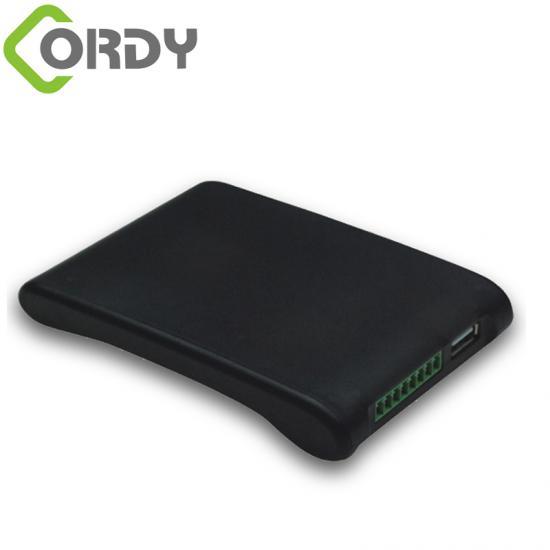
DH9809USB-L - UHF RFID Desktop Reader/Writer 920-925MHz, USB, ISO18000-6C/6B, SDK
UHF Windshield Tag for RFID Vehicle Management Systems
RFID A4 Inlay Sheet / Mifare A3 Inlay Sheet for Card Production
Manual textile management often faces significant errors due to human factors. Confusion between different types of towels, bed linens from different customers, or loss during transportation is hard to avoid. RFID solves this problem by uniquely identifying each item. When a towel is placed in a washing machine, the system records a 'wash cycle.' When it reaches the durability limit threshold (e.g., 150-200 washes depending on fabric type), the system alerts staff to remove it, preventing the use of low-quality textiles for customers.
When should a business invest in an RFID system?
The timing for RFID investment depends on operational scale, current textile loss rates, and labor costs. Businesses should consider implementation when the volume of textiles to manage reaches a large threshold, or when costs for manual counting and replacing lost items begin to directly impact profit margins.
Below are qualitative criteria to help managers decide when to invest:
- Daily turnover volume: When the number of textiles entering and leaving the warehouse exceeds the current staff's ability to accurately control within designated time frames.
- Uncontrolled loss rate: If the business records monthly textile loss exceeding acceptable thresholds and cannot identify the exact cause at any stage (customer, transportation, or in-house).
- Transparency requirements: When partners (hotels, hospitals) require detailed reports on delivered quantities for billing purposes, demanding absolute accuracy that manual records cannot provide.
- Rising labor costs: When recruiting and maintaining counting teams becomes more expensive and difficult compared to depreciating an automated system.
What is the ROI calculation formula when implementing RFID?
ROI (Return on Investment) for an RFID project is not only measured in cash but also through time savings and risk reduction. The basic formula is total benefits minus investment costs, then divided by investment costs. Benefits include reduced labor, reduced loss, and optimized inventory.
For specific calculation, businesses can apply the following formula framework:
ROI = [(A + B + C) - (D + E)] / (D + E)
Where:
- A: Annual labor cost savings (reduced counting hours x labor unit cost).
- B: Annual value of reduced textile loss (based on estimated reduction in loss rate after RFID).
- C: Value of textile lifecycle optimization (reduced replacement costs due to managing wash frequency).
- D: Initial infrastructure investment costs (readers, RFID gates, chip tags, installation).
- E: Annual operational and maintenance costs.
Note that the payback period typically varies depending on the scale and the decisiveness of the business in adopting new processes. An RFID system only truly delivers positive ROI when the data from it is used for management decisions.
What technical limitations should be considered during operation?
UHF RFID is not a 100% perfect technology in all environments. Radio waves are obstructed by metal and absorbed by liquids. Additionally, stacking textiles too thickly or chip tags overlapping each other can lead to missed tags during bulk reading.
To ensure the system operates effectively, businesses should note:
- Effect of liquids: Wet textiles will reduce the read range of RFID tags. Therefore, counting should preferably be done when textiles are dry, or adjust the reader power accordingly.
- Containment materials: Enclosed metal carts create a Faraday cage that blocks RFID waves. It is recommended to use plastic carts or metal carts with an open mesh design to allow waves to pass through.
- Tag density: When hundreds of tags are close together in a small space, interference can occur. Expert consultation is needed to configure antennas and transmit power appropriately.
- Human verification: RFID technology plays a supportive role, but in critical processes, final supervision and confirmation by staff are still necessary to ensure absolute accuracy.
What are the RFID frequency regulations in Vietnam?
In Vietnam, UHF RFID devices must comply with frequency and transmit power regulations to avoid interfering with other information systems. Using non-compliant equipment can lead to legal issues and affect actual read performance.
According to Circular 08/2021/TT-BTTTT of the Ministry of Information and Communications, UHF RFID devices operating in Vietnam must comply with the following parameters:
- Allowed frequency band: 918.4 MHz to 923 MHz.
- Maximum transmit power: Not exceeding 500 mW ERP.
- Conformity: Devices must have a declaration of conformity and affix a conformity mark before being circulated on the market.
Choosing equipment that complies with frequency and conformity regulations for RFID in Vietnam is not only a legal requirement but also ensures stable system operation, free from interference by other telecommunications devices in industrial areas.
Comparison table of textile management processes: Manual vs RFID
To better visualize the effectiveness, below is a qualitative comparison table between the two management methods:
| Criteria | Manual Management (Barcode/Handwriting) | RFID Technology Management |
|---|---|---|
| Counting speed | Slow, scanning each item or manual counting | Very fast, bulk reading of entire carts |
| Accuracy | Depends on staff concentration | High, automated data |
| Loss control | Difficult to identify loss location | Track each checkpoint |
| Lifecycle tracking | Almost impossible to do in detail | Automatically count wash cycles for each item |
| Labor costs | High, requires many control staff | Low, staff only operate equipment |
What does the investment cost for RFID laundry include?
The investment cost for an RFID system has no fixed price; it depends on the number of textiles, warehouse area, and automation level requirements. Businesses should view this as a long-term infrastructure investment rather than routine consumable procurement.
Main cost items include:
- RFID tag costs (Laundry Tags): This is the largest variable cost, depending on the total number of textiles to be tagged. Laundry tags are more expensive than standard RFID tags due to industrial durability requirements.
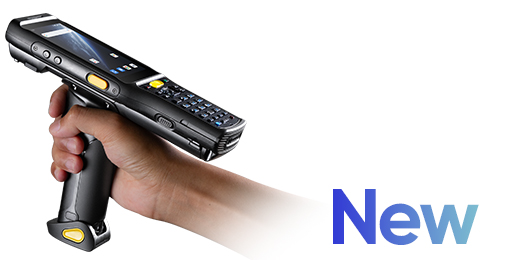
- Reading equipment (Hardware): Includes fixed readers, antennas installed at warehouse doors, handheld readers for periodic inventory, and auxiliary devices such as RFID label printers.
- Software infrastructure and integration: Costs for RFID data management software, integration with existing ERP systems or hotel/hospital management software.
- Implementation and training costs: Site surveys, equipment installation, tagging textiles, and training staff on operational procedures.
Businesses should conduct a practical survey and a small-scale pilot (POC) before full deployment to accurately assess device compatibility with the specific operating environment.
Conclusion
Investing in RFID for industrial laundry and textile management is a strategic step towards professionalism and transparency. Although initial investment costs may be higher than traditional methods, the long-term benefits in reducing loss, optimizing labor, and improving service quality are undeniable. However, businesses must pay attention to the physical limitations of the technology and strictly comply with frequency regulations in Vietnam to achieve optimal efficiency. Consulting experts on equipment infrastructure is a necessary step to build a stable and sustainable system.
Cần tư vấn thiết bị/giải pháp cụ thể?
Việt POS phản hồi trong 30 phút · Hotline 4 vùng · Khảo sát miễn phí.
