Mục lục bài viết (9)
- #What are barcode weighing scales and how do they work?
- #Which industries use barcode weighing scales?
- #Popular barcode weighing scale types in the Vietnamese market
- #What are the important features of barcode weighing scales?
- #How much does it cost to install and maintain barcode weighing scales?
- #How to choose the right barcode weighing scale for Vietnamese businesses
- #Next steps
- Related products
- Related articles
Barcode weighing scales are specialized retail devices that combine two main functions: measuring product weight and printing barcodes on labels. Instead of printing labels in the office and manually applying them, sales staff can weigh items, enter prices, and the machine automatically prints barcode labels at the counter — saving time, reducing pricing errors, and increasing transparency for customers.
In the Vietnamese retail environment, barcode weighing scales have become a standard tool in supermarkets, modern markets, fresh food stores, and specialized retail chains. Việt POS provides comprehensive barcode weighing scale solutions, from model selection consultation and installation to integration with POS and sales management systems.
What are barcode weighing scales and how do they work?
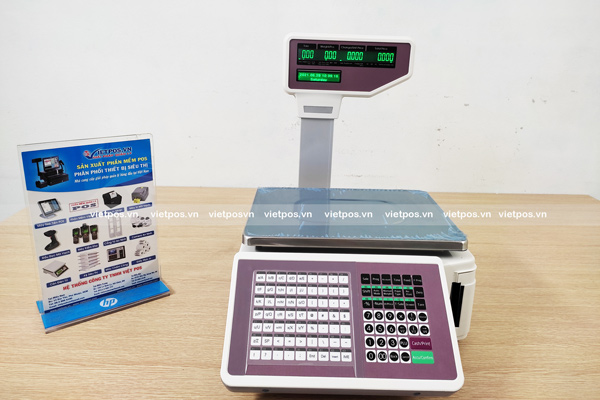
Barcode weighing scales are devices that integrate an electronic scale with a thermal or inkjet barcode printer. The operation process: staff place items on the scale, enter the item code or selling price, the machine displays the weight, then automatically prints a barcode containing information such as item name, weight, price, and expiration date onto a label to be affixed to the product. Some models support network connectivity to synchronize data with POS and inventory management systems.
Key components of barcode weighing scales include:
- Electronic weighing pan: weight sensor with ±5-10g accuracy, weighing capacity from 100g to 30kg depending on the model.
- Display screen: LCD or touchscreen, showing weight, item code, price, and other information.
- Barcode printer: thermal or inkjet, 203-300 DPI resolution, printing speed 50-150mm/second.
- Central processing unit: integrated CPU, 4-16GB memory, supports Ethernet, USB, or WiFi connectivity.
- Power supply: 220V AC or rechargeable battery, depending on the model.
Which industries use barcode weighing scales?
Barcode weighing scales are most common in fresh food retail (vegetables, meat, fish, seafood), retail supermarkets, modern markets, specialized retail stores (cakes, candies, coffee beans), and convenience store chains. Other applications include restaurants, eateries, food processing facilities, and wholesale warehouses.
Bạn đang tìm sản phẩm cho chủ đề này?
Việt POS phân phối chính hãng — bảo hành 24-36 tháng, hỗ trợ kỹ thuật 24/7.
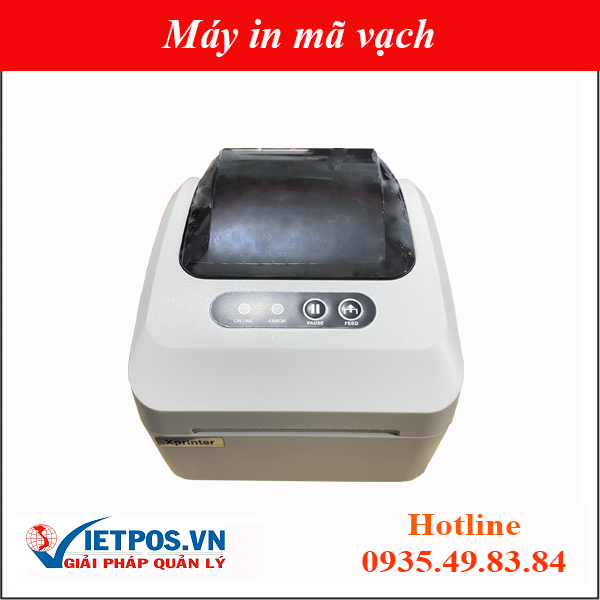
Xprinter XP-350 Plus Barcode Printer (Barcode + Bill Printing)
SKU: XP-350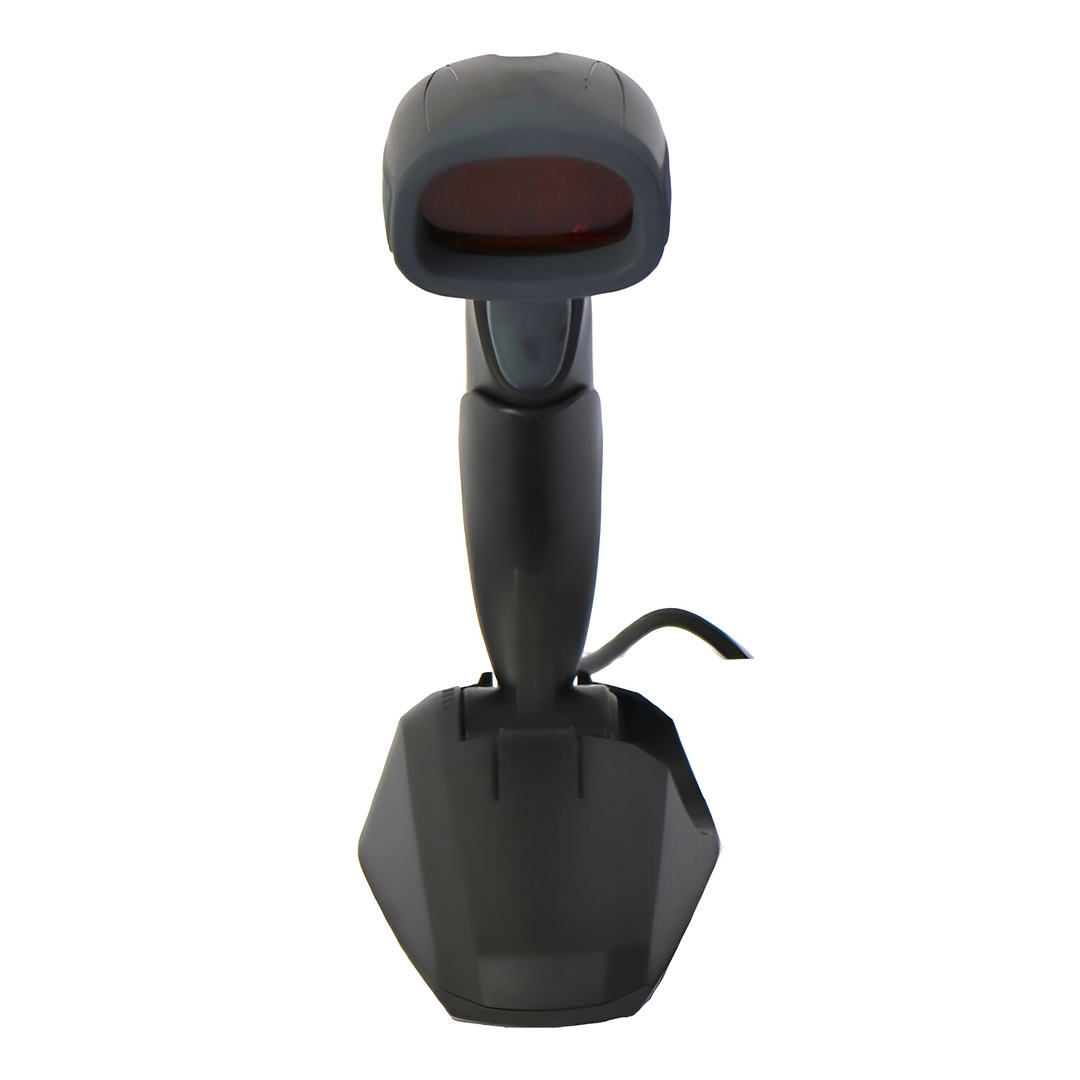
Barcode Scanner SI-2500 (1D & 2D)

KIO-KP350BM Barcode Printer
SKU: KIO-KP350BM
Thermal Barcode Printer KP-355A Plus
SKU: KP-355ALooking for products related to this topic?
Việt POS is an authorized distributor — 24-36 month warranty, 24/7 technical support.
Industries using barcode weighing scales:
| Industry | Main Application | Benefits |
|---|---|---|
| Retail Supermarkets | Weighing fresh produce, printing price labels at the counter | Increased checkout speed, reduced pricing errors, transparency |
| Modern Markets | Weighing vegetables, meat, fish, seafood | Standardized processes, increased customer trust |
| Fresh Food Stores | Weighing items, printing barcode labels, managing expiration dates | Quality control, reduced loss of expired goods |
| Specialized Retail Chains | Weighing cakes, candies, coffee beans, spices | Optimized weight-based pricing, increased revenue |
| Restaurants, Eateries | Weighing ingredients, printing labels for orders | Ingredient cost control, increased service speed |
Popular barcode weighing scale types in the Vietnamese market
The Vietnamese barcode weighing scale market has 3 main segments: basic barcode scales (priced 8-12 million VND), professional barcode scales (12-18 million VND), and high-end barcode scales with integrated POS (18-25 million VND). Leading vendors include Bizerba (Germany), Mettler-Toledo (Switzerland), Dibal (Spain), and Chinese brands like Cas, Digi, Rongta.
- Bizerba (Germany): BC II, BC III series — high-end barcode scales, ±5g accuracy, 100mm/second printing speed, network connectivity support, priced 18-25 million VND. Popular in high-end supermarkets and large modern markets.
- Mettler-Toledo (Switzerland): Xcel, Viva series — professional barcode scales, ±10g accuracy, 80-120mm/second printing speed, priced 12-18 million VND. Widely used in supermarkets and modern markets.
- Dibal (Spain): Axion, Axion Hybrid series — basic to professional barcode scales, priced 8-15 million VND, suitable for small and medium-sized retail stores.
- Cas (Korea): CL5000, CL5500 series — basic barcode scales, priced 8-12 million VND, popular in small retail stores and traditional markets.
- Digi (China): SM-500, SM-700 series — affordable barcode scales, 6-10 million VND, suitable for retail startups and small businesses.
What are the important features of barcode weighing scales?
Important features of barcode weighing scales include: weighing accuracy of ±5-10g, printing speed of 80-150mm/second, support for 1D/2D barcode printing, Ethernet/WiFi network connectivity, POS integration, expiration date management, and sales reporting. Advanced features include automatic item recognition, demand-based price optimization, and real-time data synchronization with inventory management systems.
Key features to consider when choosing a barcode weighing scale:
- Accuracy: ±5g (high-end) or ±10g (basic) — affects pricing reliability and customer trust.
- Printing speed: 80-150mm/second — high speed increases throughput at the counter, reducing queues.
- Barcode format: Supports 1D (Code128, EAN13) and 2D (QR, DataMatrix) — flexible for various applications.
- Network connectivity: Ethernet, WiFi, or 4G — allows real-time data synchronization with POS and inventory management.
- POS integration: Supports APIs or plugins for popular POS systems — optimizes sales processes.
- Expiration date management: Automatic alerts for expiring goods, reducing product loss.
- Sales reporting: Generate reports on revenue, sales volume, and profit by product or time period.
How much does it cost to install and maintain barcode weighing scales?
Installation costs for barcode weighing scales range from 2-5 million VND depending on complexity (basic 2-3 million VND, POS integration 3-5 million VND). Annual maintenance costs are about 1-2 million VND/machine (warranty, repair, software updates). Some suppliers offer comprehensive maintenance packages or rental options at 500k-1 million VND/month.
Cost details:
- Machine price: 8-25 million VND depending on brand and features (basic 8-12 million VND, professional 12-18 million VND, high-end 18-25 million VND).
- Installation: 2-5 million VND (basic 2-3 million VND, POS integration 3-5 million VND).
- Warranty: 12-24 months, including repair and component replacement.
- Annual maintenance: 1-2 million VND/machine (after warranty expires).
- Label paper: 500k-1 million VND/month depending on printing volume (each roll of paper 8-15 million characters).
- Machine rental: 500k-1 million VND/month (includes warranty replacement, maintenance, technical support).
How to choose the right barcode weighing scale for Vietnamese businesses
To choose the right barcode weighing scale, assess: sales volume (number of counters, daily weighing volume), product type (fresh, dry, frozen), POS integration requirements, and budget. Small stores (1-2 counters, <100 products/day) should choose basic scales at 8-12 million VND; medium supermarkets (3-5 counters, 500-1000 products/day) should choose professional scales at 12-18 million VND; large supermarkets (5+ counters, 1000+ products/day) should choose high-end scales at 18-25 million VND with POS integration.
Barcode weighing scale selection process:
- Assess needs: Determine the number of counters, daily weighing volume, product type, and POS integration requirements.
- Compare vendors: Bizerba (high-end, high accuracy), Mettler-Toledo (professional, stable), Dibal (basic, reasonable price), Cas/Digi (affordable, suitable for startups).
- Check features: Accuracy, printing speed, barcode format, network connectivity, POS integration, expiration date management.
- Calculate ROI: Machine price + installation + maintenance compared to benefits (20-30% increase in checkout speed, 10-15% reduction in pricing errors, 5-10% increase in revenue).
- Check technical support: Ensure the supplier has a local technical team, 24/7 support, and provides long-term warranty/maintenance.
Việt POS provides free consultation services, on-site sales assessment, and proposes barcode weighing scale configurations suitable for business scale and budget. Việt POS's technical team has experience deploying barcode weighing scales in 100+ supermarkets, modern markets, and retail stores nationwide.
Next steps
Việt POS technical team provides free on-site surveys, consults on barcode weighing scale configurations based on sales volume and budget. Contact hotline 0935 498 384 or refer to:
Need specific equipment/solution consultation?
Việt POS responds within 30 minutes · 4 regional hotlines · Free on-site survey.
Related products
Related articles

Cần tư vấn thiết bị/giải pháp cụ thể?
Việt POS phản hồi trong 30 phút · Hotline 4 vùng · Khảo sát miễn phí.
Bài viết cùng chủ đề