Mục lục bài viết (8)
- What is the Zebra AN660 RFID antenna and who is it for?
- What is the Zebra AN670 RFID antenna and who is it for?
- Detailed comparison of the AN660 and AN670 across 8 criteria
- Choose the AN660 or AN670 by specific use case
- Pros and cons of the AN660
- Pros and cons of the AN670
- Notes on deploying Zebra AN6X RFID antennas in Vietnam
- Frequently asked questions
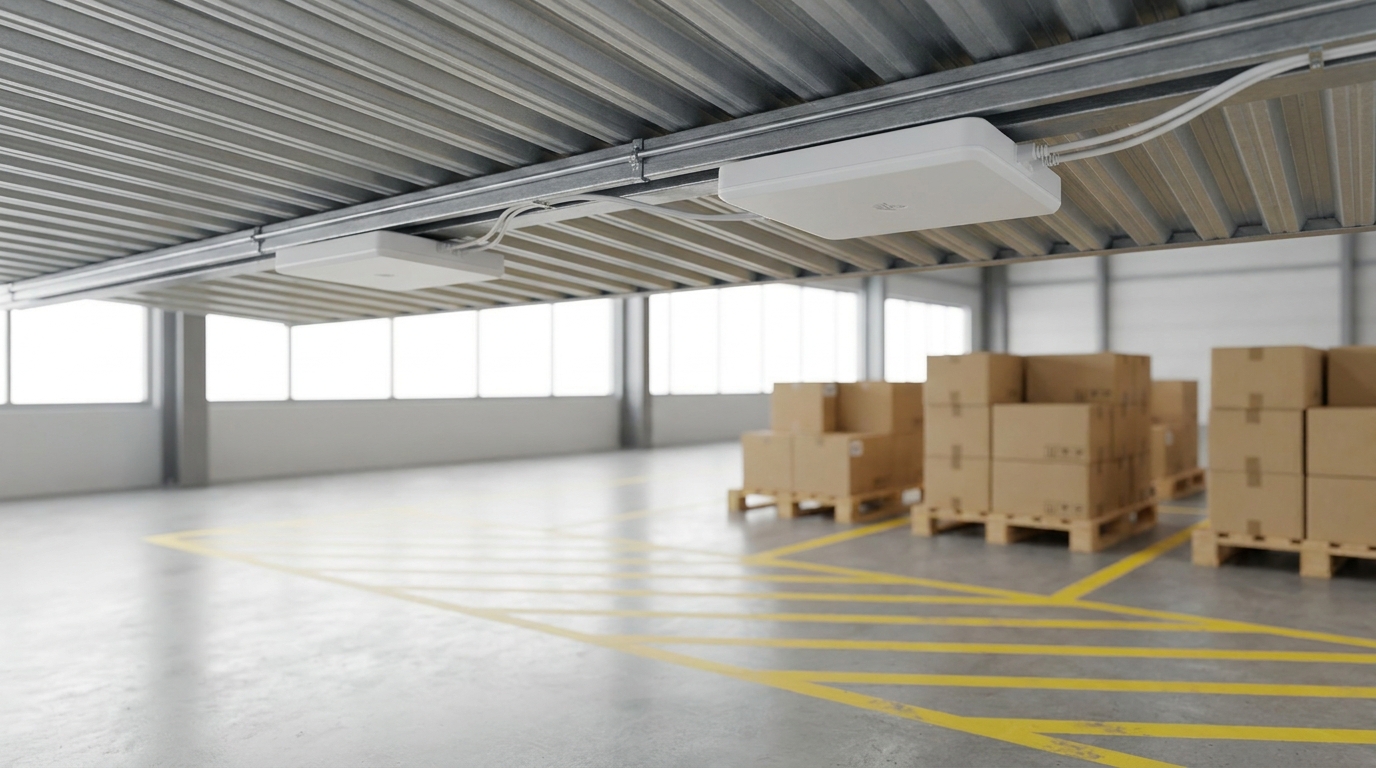
The Zebra AN660 and AN670 RFID antennas are two low-profile models in Zebra's AN6X series, designed for indoor retail, warehouse, and logistics environments. Both share almost the entire hardware configuration, differing only in operating temperature range — a small detail that determines durability in real-world operation in Vietnam. This article compares the AN660 and AN670 across 8 criteria, with 4 typical use cases to help you finalize the right model.
The AN660 and AN670 are nearly twins in configuration: same 604 x 304 x 8.6 mm frame, 10.5 dBiC gain, right-hand circular polarization, IP54, 25° x 60° beamwidth. The only difference is the temperature range: the AN660 operates 0-50°C, the AN670 extends -20 to 55°C. Standard or indoor retail warehouses choose the AN660; cold rooms, covered docks, or northern Vietnam winter areas choose the AN670.
Table of contents
- What is the Zebra AN660 RFID antenna and who is it for?
- What is the Zebra AN670 RFID antenna and who is it for?
- Detailed comparison of the AN660 and AN670 across 8 criteria
- Choose the AN660 or AN670 by specific use case
- Pros and cons of the AN660
- Pros and cons of the AN670
- Notes on deploying Zebra AN6X RFID antennas in Vietnam
- Frequently asked questions
What is the Zebra AN660 RFID antenna and who is it for?
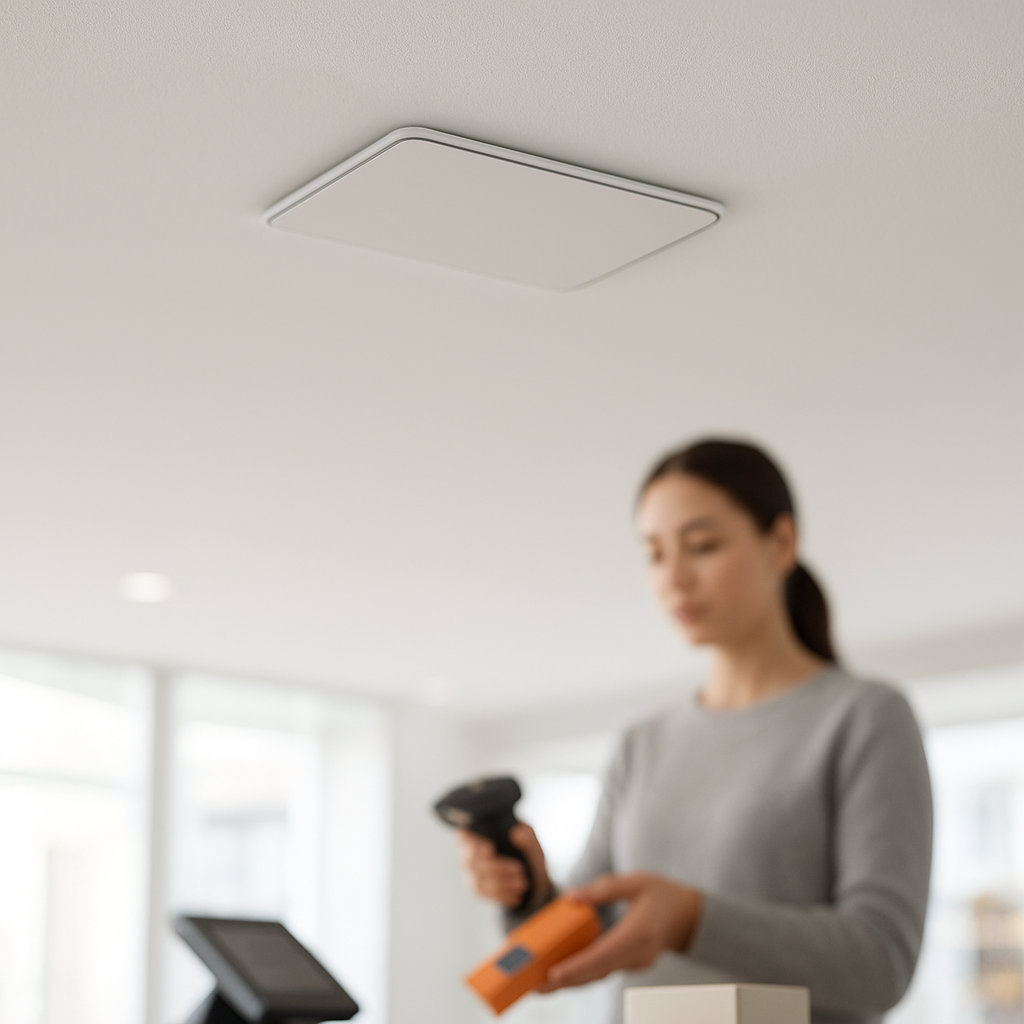
The Zebra AN660 RFID antenna is a low-profile antenna in the AN6X series, operating in the 0°C to 50°C temperature range, with IP54 sealing, 10.5 dBiC gain, and right-hand circular polarization. With its slim 8.6 mm frame, the AN660 is suitable for ceiling or wall mounting in retail areas, dry warehouses, and air-conditioned sorting rooms — where temperatures stay within 18-32°C.
The AN660 is a commonly deployed model at Vietnamese retail chains for bulk tag reading at checkout counters or entrances. The 25° beamwidth on the xz plane allows a narrow read zone, limiting interference between adjacent antennas — a key factor when mounting 4-6 antennas on the same ceiling array.
What is the Zebra AN670 RFID antenna and who is it for?
Related products
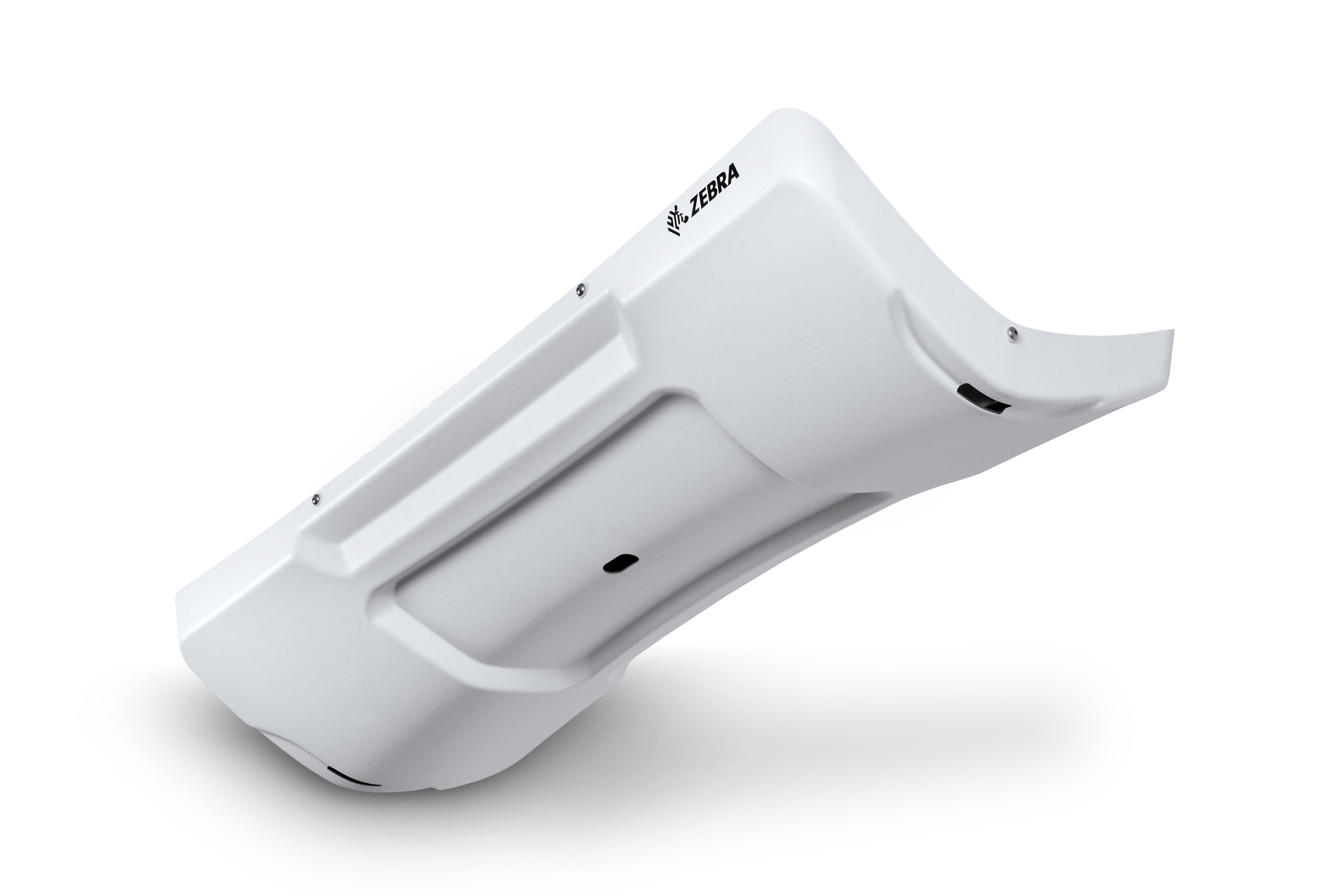
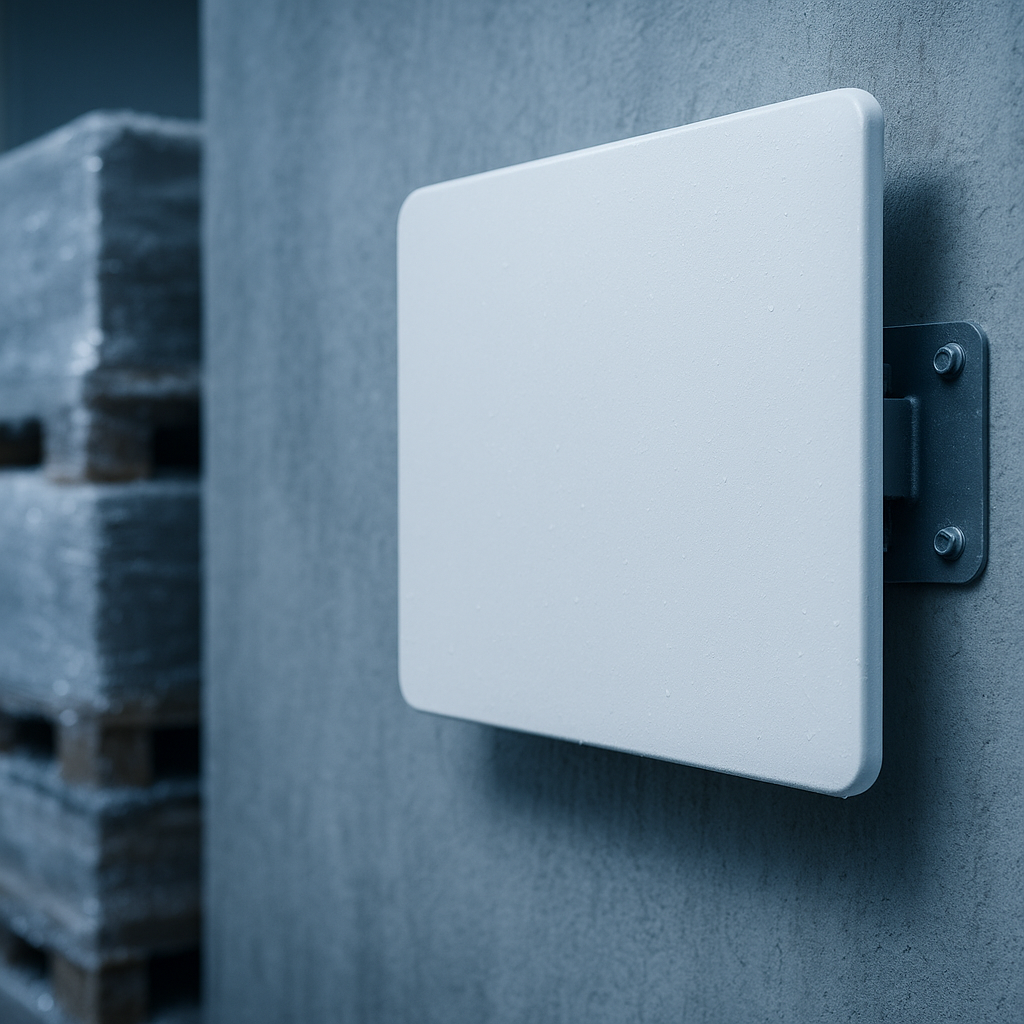
The Zebra AN670 RFID antenna has the same 604 x 304 x 8.6 mm frame, the same 10.5 dBiC gain and IP54 rating, but extends the temperature range from -20°C to 55°C. This is the choice for cold rooms, covered shipping docks, northern Vietnam winter areas, or factories with areas of strong temperature fluctuation.
In appearance, the AN670 looks no different from the AN660 — same white tone, same mounting base style. The difference lies in the internal components, which withstand a temperature amplitude 20°C wider than the AN660. For businesses with an effective cold storage management solution with iData K1 Cold and K8 Cold, the AN670 is the antenna piece compatible with cold-resistant terminal devices.
Detailed comparison of the AN660 and AN670 across 8 criteria

The AN660 and AN670 are identical in 7 of 8 hardware criteria — dimensions, gain, polarization, beamwidth, sealing rating, RFID capability, reader dependency. The only difference per the datasheet is the operating temperature range. The table below compares them side by side so you can clearly see what truly separates the two models.
| Criterion | AN660 | AN670 | Winner |
|---|---|---|---|
| Dimensions | 604 x 304 x 8.6 mm | 604 x 304 x 8.6 mm | Tie |
| Gain | 10.5 dBiC | 10.5 dBiC | Tie |
| Polarization | Right-hand circular (RHCP) | Right-hand circular (RHCP) | Tie |
| Beamwidth | 25° xz / 60° yz | 25° xz / 60° yz | Tie |
| Sealing rating | IP54 | IP54 | Tie |
| Temperature range | 0°C to 50°C | -20°C to 55°C | Best: AN670 |
| RFID capability | Yes (RAIN RFID) | Yes (RAIN RFID) | Tie |
| Read range | Depends on reader | Depends on reader | Tie |
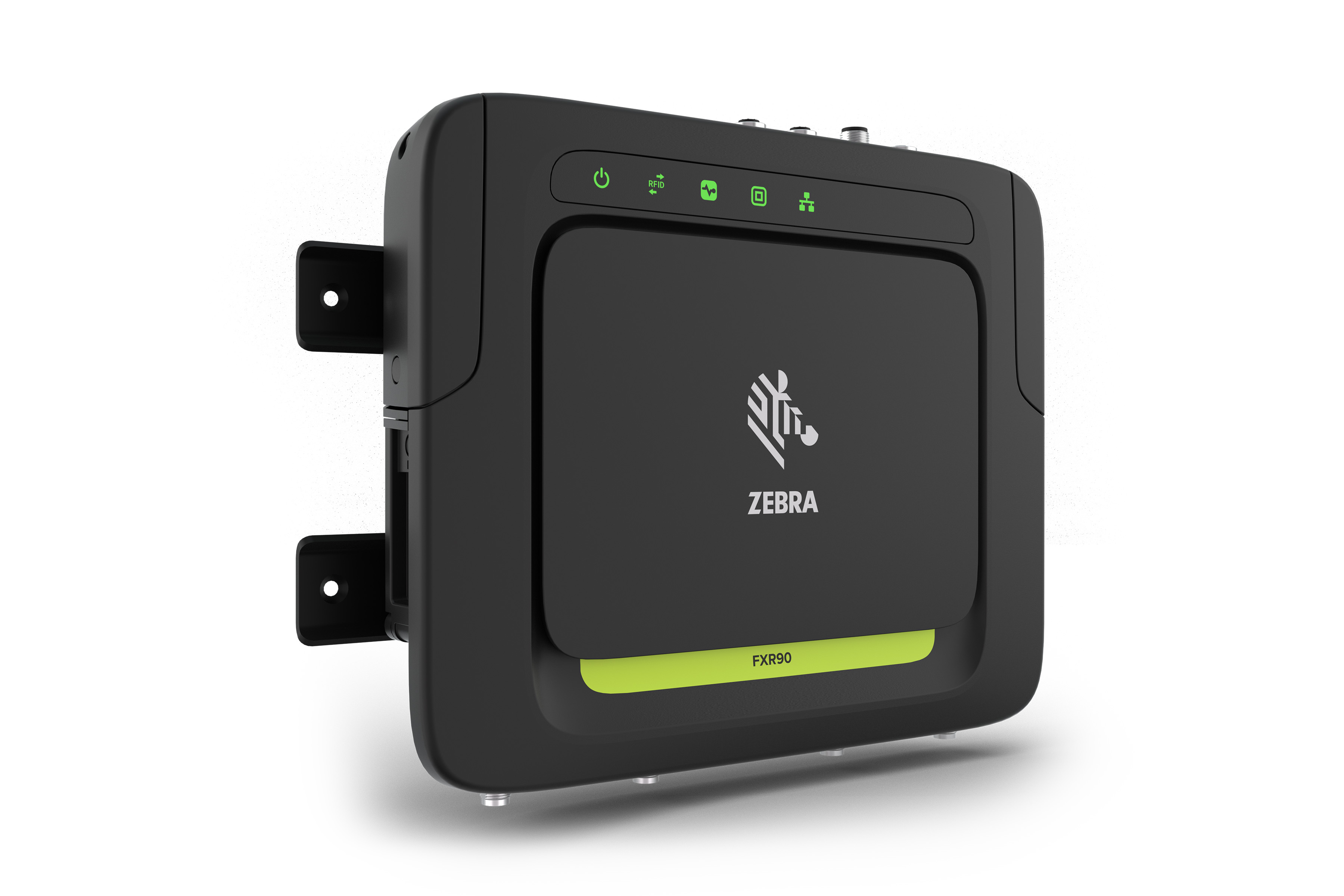
Notable point: both models clearly state that read range depends on the paired RFID reader, with no fixed figure. This means if you are using the Zebra FXR90 Ultra-Rugged Fixed UHF RFID Reader or the Zebra ST5500 Transition Point RFID Reader, the read performance of the AN660 and AN670 will be equivalent under the same temperature conditions.
Choose the AN660 or AN670 by specific use case
Since the hardware configuration is nearly identical, the model selection criterion revolves around the temperature environment of the installation point. Below are 4 typical use cases for Vietnamese businesses and the corresponding recommendations.
Use case 1 — Retail chains, indoor mini-marts with air conditioning
Temperatures of 22-30°C year-round, mounted on ceilings 3-4 m high. Choose the AN660 — temperature threshold is more than sufficient, and cost is typically lower than the AN670 since cold-resistant components are not needed. For checkout counters, you can combine it with the Zebra DS9308 barcode scanner for supermarkets and retail to read both barcodes and RFID tags.
Use case 2 — 0-8°C cold rooms or -18°C freezer rooms
Operating temperatures below the AN660 threshold (0°C). Choose the AN670 — this is the only one of the two models that meets the -20°C range. For freezer rooms, it should be paired with cold-resistant terminal devices such as the iData K1 Cold or K8 Cold.
Use case 3 — Covered shipping docks in northern Vietnam
In winter, temperatures can drop to 5-10°C at night and rise to 35-40°C during the day. Choose the AN670 — the wider temperature range helps the antenna avoid performance degradation when temperatures fluctuate strongly. This is also an area that often uses transition RFID portals such as the Zebra D800 transition RFID portal for dock doors.
Use case 4 — Manufacturing plants with high-temperature areas
Areas near furnaces, compressors, or welding zones can exceed 50°C. Choose the AN670 — the 55°C threshold provides a 5°C safety margin, while the AN660 has already hit its 50°C ceiling. For factories that need to read large volumes, you can also refer to RFID label printers to print tags on site.
Pros and cons of the AN660
The AN660's advantage is that it is the standard model for indoor environments, typically lower in cost than the AN670, and suitable for large-scale deployment at retail chains. Its disadvantage is the narrow temperature range — it cannot be used for cold rooms or areas exceeding 50°C.
AN660 pros
- 8.6 mm flat frame, discreet ceiling or wall mounting
- 10.5 dBiC gain, 25° beamwidth limits interference between antennas
- IP54 dust and light water spray protection
- Typically lower cost than the AN670 with the same configuration
AN660 cons
- Temperature range only 0-50°C, cannot be used in cold rooms
- Not suitable for outdoor northern Vietnam docks in winter
- No safety margin for high-temperature areas
Pros and cons of the AN670
The AN670 retains all the AN660's advantages in dimensions, gain, and beamwidth, while extending the temperature range to -20°C to 55°C. Its main disadvantage is typically higher cost — you should only choose the AN670 when the environment truly requires a wide temperature range.
AN670 pros
- -20°C to 55°C temperature range, usable in cold rooms and outdoor docks
- Retains the same frame, gain, and beamwidth configuration as the AN660
- IP54, safe for humid and dusty environments
- Suitable for all seasons in northern and southern Vietnam
AN670 cons
- Typically higher cost than the AN660 due to cold-resistant components
- If installed indoors with air conditioning, the wide temperature range is redundant
- Still requires a suitable RFID reader to fully exploit the 10.5 dBiC gain
Notes on deploying Zebra AN6X RFID antennas in Vietnam
Three factors determine the real-world performance of the AN660 and AN670 in Vietnam: antenna mounting distance, surrounding shelf materials, and the paired RFID reader. With the same antenna, read performance can vary by 30-50% just because of metal shelving or tag density in the read zone.
- Mounting distance: The AN6X is typically mounted 3-5 m from the read zone to take advantage of the 25° beamwidth. Mounting too close causes the read zone to spill into adjacent areas.
- Shelf materials: Metal shelving strongly reflects UHF waves, requiring antenna tilt adjustment of 5-15° relative to the horizontal plane.
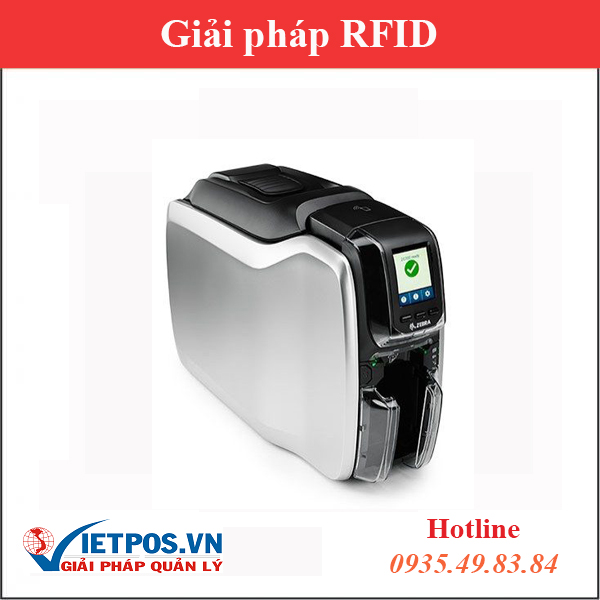
- Paired reader: Both the AN660 and AN670 clearly state that read range depends on the reader. For systems requiring high-volume reading, pair with a high-power fixed reader. For RFID card printing systems, you can also see the Zebra ZC300 RFID Card Printer: Installation and Usage Guide.
- Software configuration: Use reader management software to fine-tune read power per antenna, avoiding cross-interference when mounting 4-6 antennas on the same ceiling array.
Frequently asked questions
What is the difference between the AN660 and AN670?
According to the datasheet, the AN660 and AN670 differ only in operating temperature range. The AN660 runs 0°C to 50°C, the AN670 extends -20°C to 55°C. All other specs — 604 x 304 x 8.6 mm dimensions, 10.5 dBiC gain, right-hand circular polarization, 25° x 60° beamwidth, IP54 sealing — are completely identical.
Which antenna is suitable for cold rooms?
The AN670 is the mandatory choice for cold rooms because its temperature range goes down to -20°C. The AN660 only runs from 0°C, so it does not meet the requirements of a 0-8°C cold room or a -18°C freezer room. For cold rooms, the AN670 should be paired with cold-resistant terminal devices such as the iData K1 Cold or K8 Cold to synchronize the temperature range across the entire system.
What is the read range of the AN660 and AN670?
Both models clearly state that read range depends on the paired RFID reader, with no fixed figure in the datasheet. In real-world deployments, read range typically ranges from 3-8 m depending on reader power, tag density, and surrounding materials. Therefore, when choosing an antenna, you need to finalize the reader first before calculating the read zone.
Can the AN660 be used for outdoor docks in northern Vietnam?
It should not be. Covered docks in northern Vietnam in winter can drop to 5-10°C at night — still within the AN660 threshold but close to the edge. When temperatures fluctuate strongly between day and night, the AN670 with its -20°C to 55°C range is safer and less prone to performance degradation after years of operation.
Which reader should the AN660 or AN670 be paired with?
It depends on the deployment scale. For dock portals or transition points, you can use the Zebra ST5500 or FXR90. For systems that need to print and read RFID tags on site, combine with the Zebra ZC300 RFID card printer. Both the AN660 and AN670 are compatible with Zebra's standard UHF RAIN RFID readers.
Need advice on choosing the Zebra AN660 or AN670 RFID antenna for your specific warehouse and retail model? Call the hotline 0935 498 384 or email info@vietpos.vn — the Việt POS technical team supports site surveys, read zone calculations, and genuine equipment quotations.
Cần tư vấn thiết bị/giải pháp cụ thể?
Việt POS phản hồi trong 30 phút · Hotline 4 vùng · Khảo sát miễn phí.
Bài viết cùng chủ đề