Mục lục bài viết (7)
- Cybersecurity Risk #1: DDoS Attack on Gate Controllers
- Risk #2: Firmware Vulnerability Exploitation on Turnstiles and Flap Barriers
- Risk #3: Man-in-the-Middle (MITM) Attack on Communication Protocols
- Risk #4: Intrusion Through Unnecessary Service Ports on IoT Devices
- Risk #5: Poorly Secured IoT Devices from Unverified Suppliers
- Comprehensive Solution to Protect Factory Security Control Systems
- Frequently Asked Questions
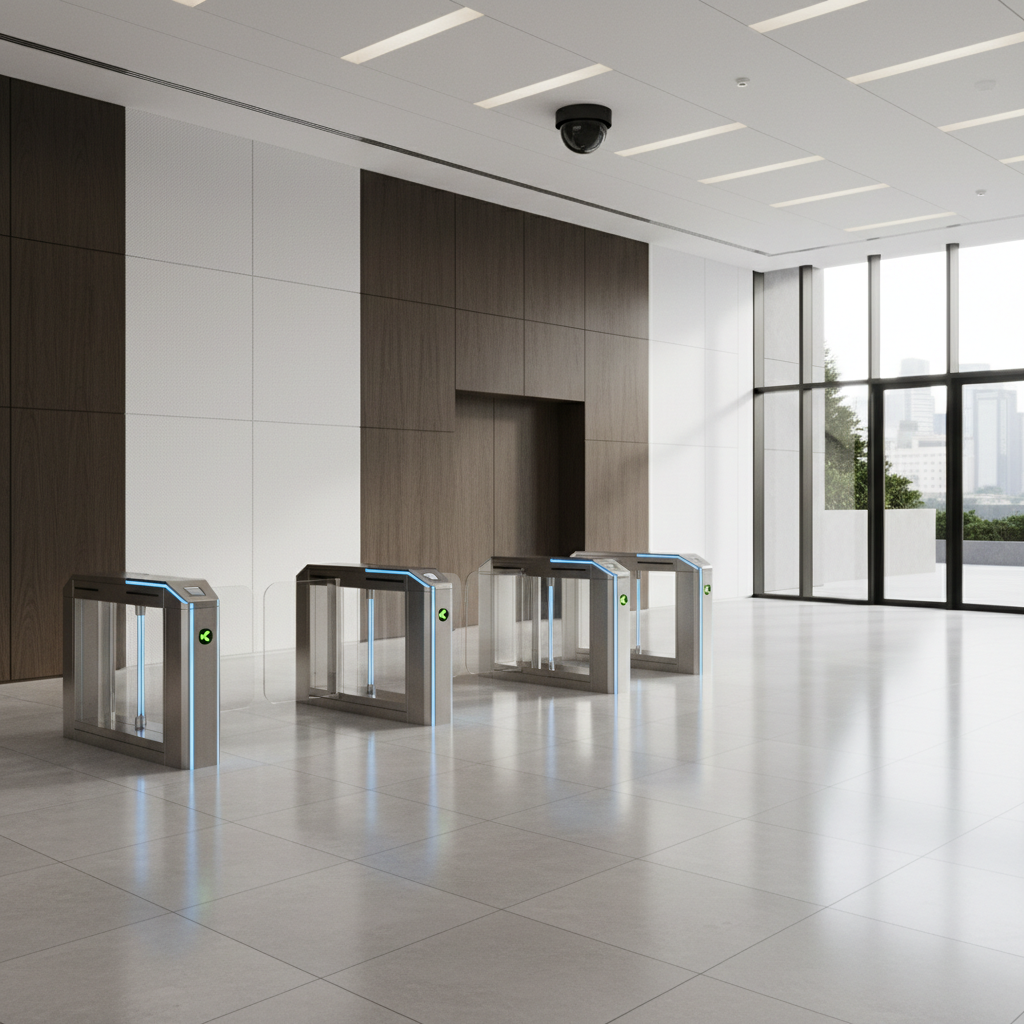
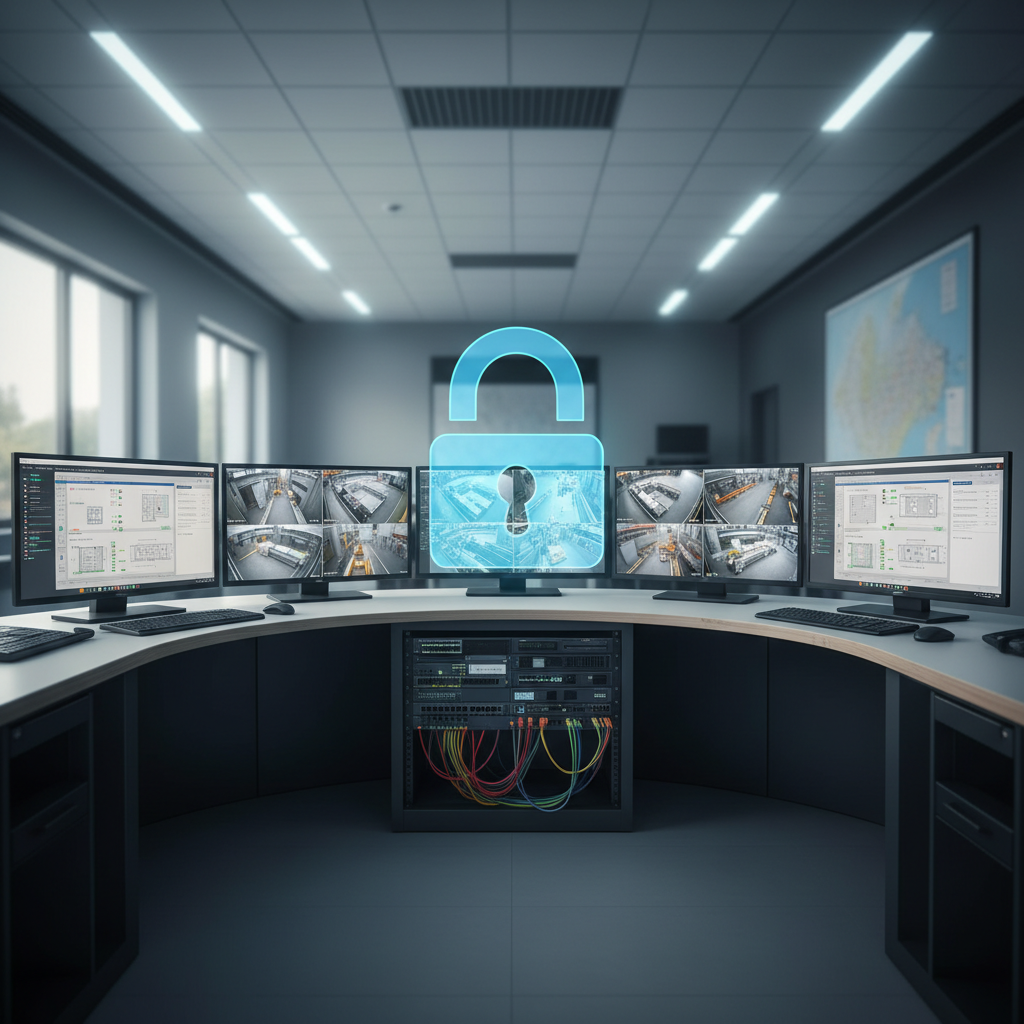
Cybersecurity for factory security control systems is no longer an option but a mandatory requirement when devices such as full height turnstiles, flap barriers, and AI cameras are directly connected to the OT/IT network. A small vulnerability can allow hackers to disable the entire access control system, causing production disruptions and personnel data leaks. So what are the main risks and effective prevention methods?
Cybersecurity Risk #1: DDoS Attack on Gate Controllers
Gate controllers (tripod, swing barrier, full height) typically run on embedded platforms with limited resources. When hit by a DDoS attack, the device may stop responding, causing the gate to fail to open or open continuously, breaking access control.
These attacks often target open service ports (Telnet, unencrypted HTTP) on the device. According to a Dragos 2025 report, 40% of OT incidents in the manufacturing sector originate from network-connected peripheral devices. To prevent this, automation engineers need to:
- Close all unnecessary service ports on the gate controller.
- Deploy a dedicated VLAN for the access control system, isolating it from the IT network and production OT network.
- Use devices with hardware-level DDoS protection mechanisms (e.g., ZOJE gates with integrated watchdog auto-reset).
Risk #2: Firmware Vulnerability Exploitation on Turnstiles and Flap Barriers
Firmware on security control devices is often not updated regularly, allowing hackers to exploit known vulnerabilities (CVEs) to gain control.
Bạn đang tìm sản phẩm cho chủ đề này?
Việt POS phân phối chính hãng — bảo hành 24-36 tháng, hỗ trợ kỹ thuật 24/7.
RFID TRC915 Ceiling Mounted Security Control Device
SKU: TRC915
Security tags - security spiders for bottles

Supermarket security equipment for exit control
1, 2, and 4-Door Access Control Panel - Atlas Prox Series
SKU: Atlas Prox SeriesFor example, some low-cost full height turnstile models use older ARM chips with published security vulnerabilities. Hackers can overwrite firmware, install backdoors, or turn the device into a botnet. Solutions:
- Choose a supplier with a regular firmware update policy (at least every 6 months).
- Sign a cybersecurity maintenance contract with an integrator (Việt POS supports firmware auditing for ZOJE series).
- Implement secure boot mechanisms to prevent unauthorized firmware.
Risk #3: Man-in-the-Middle (MITM) Attack on Communication Protocols
Communication protocols between the gate controller and the central server (RS-485, unencrypted TCP/IP) are vulnerable to MITM attacks, allowing hackers to spoof gate open commands or steal card data.
In practice, many factories still use unencrypted Modbus TCP for access control systems. Hackers only need access to the LAN (via weak WiFi or public USB ports) to intercept and modify packets. Prevention:
- Encrypt all connections using TLS 1.3 or site-to-site VPN.
- Use devices supporting digital certificate authentication (e.g., ZOJE flap barrier with integrated security chip).
- Apply zero-trust access control: each device is only allowed to communicate with a specific server.
Risk #4: Intrusion Through Unnecessary Service Ports on IoT Devices
Modern security control devices (AI cameras, card readers, turnstiles) often have many default open service ports (SSH, SNMP, HTTP) for configuration, but these also serve as entry points for hackers.
A 2024 Claroty survey found that 60% of IoT devices in factories have at least one unnecessary open service port. To mitigate:
- Perform regular port scans using tools like Nmap.
- Disable unused services (Telnet, FTP, public SNMP).
- Choose devices with a "hardened" mode from the manufacturer (ZOJE provides custom security profiles for each factory).
Risk #5: Poorly Secured IoT Devices from Unverified Suppliers
Many factories purchase turnstiles, barriers, and AI cameras from small suppliers without security certifications (CE, FCC, IEC 62443). Devices may contain backdoors or spyware from the manufacturer.
This risk is especially severe when devices are connected to the shared OT network. Hackers can exploit them remotely without physical access. Solutions:
- Require the supplier to provide security testing reports (penetration testing) for the device.
- Prioritize reputable brands like ZOJE (certified to IEC 62443-4-2).
- Deploy OT network monitoring solutions (OT-SOC) to detect anomalies.
Comprehensive Solution to Protect Factory Security Control Systems
Việt POS provides integrated solutions for ZOJE security gates (tripod, swing barrier, full height, flap barrier) with built-in network security features, helping automation engineers easily deploy a zero-trust architecture.
ZOJE gate series such as the ZOJE Z2004 90-Degree Full Height Turnstile and Flap Barrier Mars Pro F1000 support:
- Encrypted TLS 1.3 communication.
- Hardened mode with minimal service ports.
- Firmware updates via secure channel (signed update).
- Compatibility with security management systems (VMS, ACS) via secure API.
Việt POS also offers cybersecurity auditing services for access control systems, helping detect and patch vulnerabilities before exploitation.
Frequently Asked Questions
Can a factory security control system be attacked via the OT network?
How to check for security vulnerabilities on a turnstile?
Is it necessary to encrypt the connection between the card reader and the gate controller?
Does Việt POS support cybersecurity auditing for access control systems?
To ensure cybersecurity for your factory security control system, contact Việt POS immediately via hotline 0935 498 384 or email info@vietpos.vn for consultation on integrated ZOJE security gate solutions and security auditing services.
Cần tư vấn thiết bị/giải pháp cụ thể?
Việt POS phản hồi trong 30 phút · Hotline 4 vùng · Khảo sát miễn phí.
Bài viết cùng chủ đề