Mục lục bài viết (9)
- #What is RFID inventory management and why do Vietnamese businesses need it?
- #What are the main components of an RFID inventory system?
- #What are the steps in designing an RFID inventory solution?
- #Which RFID inventory equipment is suitable for Vietnamese businesses?
- #How much does it cost to implement RFID inventory management?
- #What are the challenges when implementing RFID inventory management in Vietnam?
- #Next Steps
- Related products
- Articles on the same topic
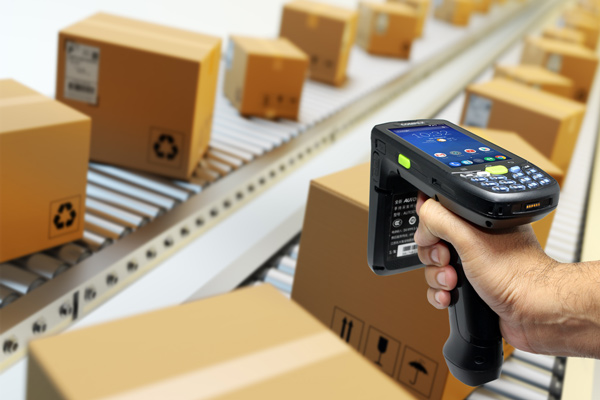
RFID (Radio Frequency Identification) inventory management is a technology that uses radio waves for identification, with each tag containing a unique UID chip. Instead of scanning individual barcodes, inventory staff only need to pass an RFID reader over the goods area. The system automatically identifies all tags within a range of 3-10 meters (depending on the device type), recording the location, quantity, and status of goods in seconds. This helps Vietnamese businesses reduce inventory time by 30-50%, increase accuracy to 95-99%, and decrease inventory loss by 20-40%.
Việt POS has consulted on and designed RFID inventory solutions for over 100 retail, logistics, and manufacturing businesses in Vietnam since 2018. This article shares the system design process, from needs assessment and equipment selection to implementation and operation.
What is RFID inventory management and why do Vietnamese businesses need it?
RFID inventory management is an automated warehouse management system utilizing radio frequency identification technology. Instead of manual inventory checks (scanning each product's barcode), RFID allows staff to scan multiple tags in seconds, reducing inventory time by 30-50%, increasing accuracy to 95-99%, and decreasing loss by 20-40%.
Vietnamese businesses adopting RFID inventory management typically experience the following benefits:
- Reduced inventory time from 4-6 hours to 1-2 hours (for warehouses of 500-1000 m²).
- Increased accuracy from 85-90% (manual inventory) to 95-99% (RFID).
- Reduced inventory loss by 20-40% due to early detection of missing or misplaced items.
- Optimized inbound/outbound processes, reducing labor costs by 15-25%.
- Provided real-time data to the Warehouse Management System (WMS), supporting business decisions.
What are the main components of an RFID inventory system?
An RFID inventory system consists of 4 main components: (1) RFID tags attached to products/pallets, (2) RFID readers (handheld or fixed readers), (3) RFID antennas for transmitting/receiving signals, and (4) Warehouse Management Software (WMS) integrated with RFID.
Bạn đang tìm sản phẩm cho chủ đề này?
Việt POS phân phối chính hãng — bảo hành 24-36 tháng, hỗ trợ kỹ thuật 24/7.
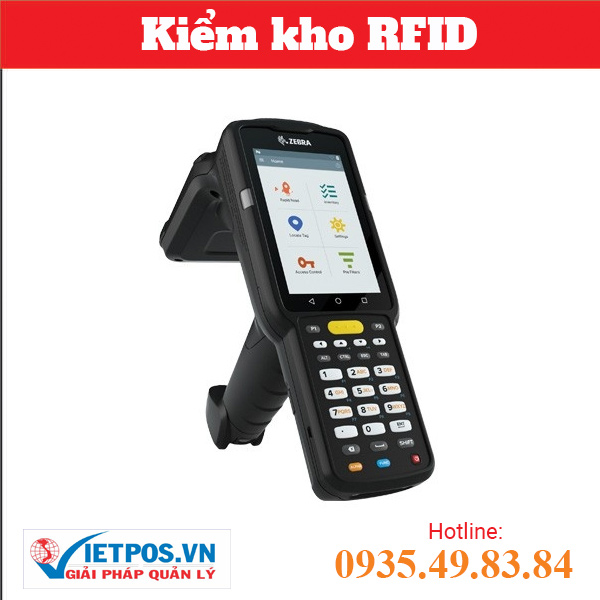
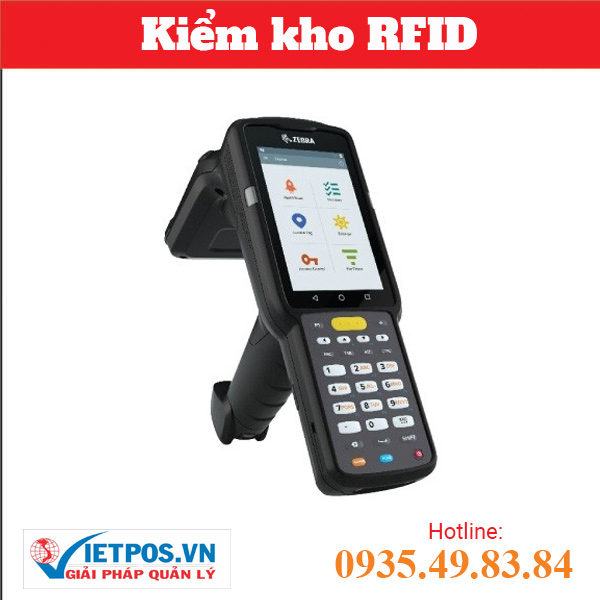
Are you looking for products for this topic?
Việt POS is an authorized distributor — 24-36 month warranty, 24/7 technical support.
| Component | Function | Product Examples |
|---|---|---|
| RFID Tag | Attached to products/pallets, stores UID, quantity, manufacturing date | UHF Gen2 (EPC) tags, HF (ISO 15693) tags |
| RFID Reader | Scans tags, records data, transmits to software | Zebra DS9908R, RFD8500, Cipherlab CPT-8000L |
| RFID Antenna | Transmits/receives radio waves, defines scanning range | Linear antenna, circular antenna (3-10 meters) |
| WMS Software | Stores data, generates reports, integrates with ERP system | Custom software or RFID module of existing WMS |
What are the steps in designing an RFID inventory solution?
The RFID inventory solution design process involves 5 main steps: (1) Needs and warehouse environment assessment, (2) RFID type selection (UHF or HF), (3) Reader and tag selection, (4) Antenna layout and scanning zone design, (5) Pilot implementation and full-scale expansion.
- Needs and warehouse environment assessment: Evaluate warehouse area, wall materials (concrete, metal, wood), humidity, temperature, product types (metal, liquid, food), inventory frequency, number of employees. This affects the choice of RFID type and equipment.
- RFID type selection: UHF (Ultra High Frequency, 860-960 MHz) RFID is suitable for large warehouses, 5-10 meter scanning range, low tag cost (500-2000 VND/tag). HF (High Frequency, 13.56 MHz) RFID is suitable for small warehouses, 0.5-1.5 meter range, higher tag cost (3000-8000 VND/tag), but better interference resistance in metal environments.
- Reader and tag selection: Handheld readers like Zebra DS9908R, RFD8500, Cipherlab CPT-8000L are suitable for periodic inventory. Fixed readers are suitable for warehouse entry/exit points, automated inventory. Tags are chosen based on product type: adhesive tags for light goods, hard tags for heavy goods/harsh environments.
- Antenna layout and scanning zone design: Determine antenna placement, scanning range, and avoid dead zones. A 500-1000 m² warehouse typically needs 2-4 antennas, while a 1000-5000 m² warehouse needs 4-8 antennas. Test the actual scanning range before official deployment.
- Pilot implementation and expansion: Select a small area (100-200 m²) for a 2-4 week pilot, evaluate accuracy, scanning speed, and operating costs. Then expand to the entire warehouse, train staff, and integrate WMS software.
Which RFID inventory equipment is suitable for Vietnamese businesses?
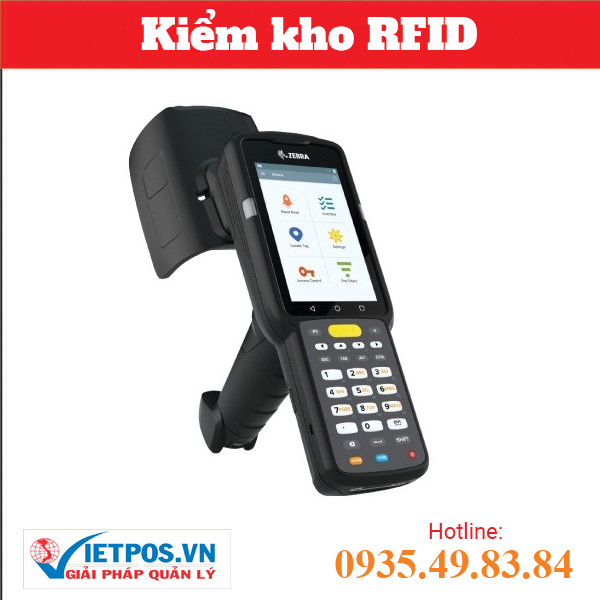
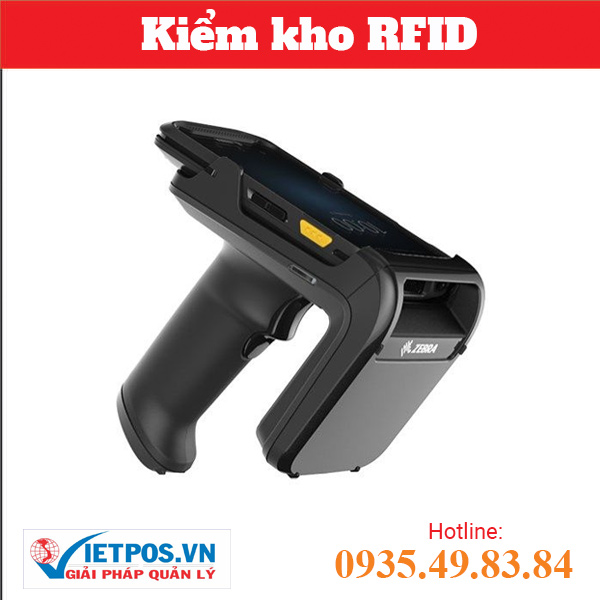
Popular RFID inventory equipment in Vietnam includes Zebra DS9908R (handheld, UHF, 5-10 meters, 25-35 million VND), Zebra RFD8500 (handheld, UHF, 8-12 meters, 18-28 million VND), Cipherlab CPT-8000L (handheld, UHF, 5-8 meters, 15-22 million VND). The choice depends on warehouse size, product type, and budget.
Below is a comparison table of popular RFID inventory equipment:
| Device | Type | Scanning Range | Accuracy | Estimated Price | Suitable for |
|---|---|---|---|---|---|
| Zebra DS9908R | Handheld UHF | 5-10 meters | 95-99% | 25-35 million | Large warehouses, diverse goods |
| Zebra RFD8500 | Handheld UHF | 8-12 meters | 95-99% | 18-28 million | Medium-large warehouses, periodic inventory |
| Zebra RFD2000 | Handheld UHF | 3-6 meters | 90-95% | 12-18 million | Small-medium warehouses, limited budget |
| Cipherlab CPT-8000L | Handheld UHF | 5-8 meters | 95-98% | 15-22 million | Medium warehouses, consumer goods |
| Zebra MC3390XR | Handheld UHF+Barcode | 5-10 meters (RFID) | 95-99% | 20-30 million | Hybrid warehouses (RFID + barcode) |
Based on Việt POS's implementation experience, Vietnamese businesses often choose Zebra RFD8500 or Cipherlab CPT-8000L due to a good balance of performance, price, and technical support in Vietnam.
How much does it cost to implement RFID inventory management?
The estimated cost to implement RFID inventory management for a 500-1000 m² warehouse is 80-150 million VND (equipment + tags + antennas + installation). For a 1000-5000 m² warehouse, it's estimated at 150-300 million VND. Annual operating costs (maintenance, replacement tags) are estimated at 10-20% of the initial cost.
The cost of implementing RFID inventory management includes the following items:
- RFID readers: 1-2 handheld devices (15-35 million VND/unit) or 2-4 fixed readers (25-50 million VND/unit).
- RFID tags: 500-5000 tags depending on warehouse size (500-2000 VND/UHF tag, 3000-8000 VND/HF tag). Total: 5-40 million VND.
- RFID antennas: 2-8 antennas depending on warehouse area (2-5 million VND/antenna). Total: 5-40 million VND.
- WMS software + RFID integration: 20-50 million VND (custom software) or 5-15 million VND (RFID module of existing WMS).
- Installation + training: 10-20 million VND (survey, antenna installation, device configuration, staff training).
Total cost: 80-150 million VND (for 500-1000 m² warehouse), 150-300 million VND (for 1000-5000 m² warehouse). ROI is typically achieved within 12-24 months due to reduced labor costs and decreased inventory loss.
What are the challenges when implementing RFID inventory management in Vietnam?
Key challenges when implementing RFID inventory management in Vietnam include: (1) Warehouse environments with many metal materials causing signal interference, (2) Staff unfamiliar with new technology, (3) High RFID tag costs compared to barcodes, (4) Legacy WMS systems that are difficult to integrate with RFID.
To overcome these challenges, Việt POS recommends:
- Thorough warehouse environment survey: Identify interference zones (metal, machinery), select appropriate RFID type (UHF or HF), design antenna layout to avoid dead zones.
- Comprehensive staff training: Instruct on device usage, understand RFID inventory procedures, and handle basic troubleshooting. Conduct training 2-3 times during the first month of implementation.
- Choose high-quality RFID tags: GS1 standard UHF Gen2 tags, Impinj or NXP chips, high durability, low error rate. Higher cost by 20-30% but reduces replacement tag costs.
- Phased WMS integration: If the legacy WMS is difficult to integrate, implement RFID independently first, then integrate gradually. Or upgrade WMS in parallel with RFID implementation.
- Continuous technical support: Choose a supplier with a technical team in Vietnam, providing 24/7 support during the first 6 months of implementation.
Next Steps
Việt POS's technical team provides free surveys and consulting for RFID inventory solution design tailored to your business's warehouse size, product type, and budget. Contact hotline 0935 498 384 or refer to:
Need specific equipment/solution consultation?
Việt POS responds within 30 minutes · 4 regional hotlines · Free survey.
Related products
Articles on the same topic
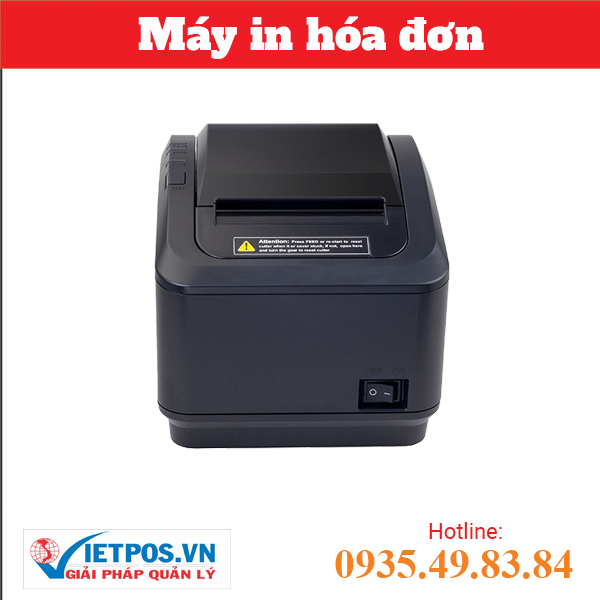

Cần tư vấn thiết bị/giải pháp cụ thể?
Việt POS phản hồi trong 30 phút · Hotline 4 vùng · Khảo sát miễn phí.
Bài viết cùng chủ đề